Lab Equipment Management: Why the Paper Logbook Has Had Its Day
In GMP- and GLP-regulated laboratories, lab equipment management is not a side task – it is a core compliance process. Every instrument used in the development, testing, or manufacture of pharmaceutical products must stay fully traceable across its entire lifecycle. The backbone of that traceability is the technical logbook, or in more modern terms, the TechLog.
For a single instrument, that sounds trivial. Across a lab with dozens or hundreds of pieces of equipment, the seemingly simple act of documentation quietly turns into a structural burden. This is where it gets decided whether equipment management stays a smooth background process or becomes a recurring audit risk.
The problem with the paper equipment logbook
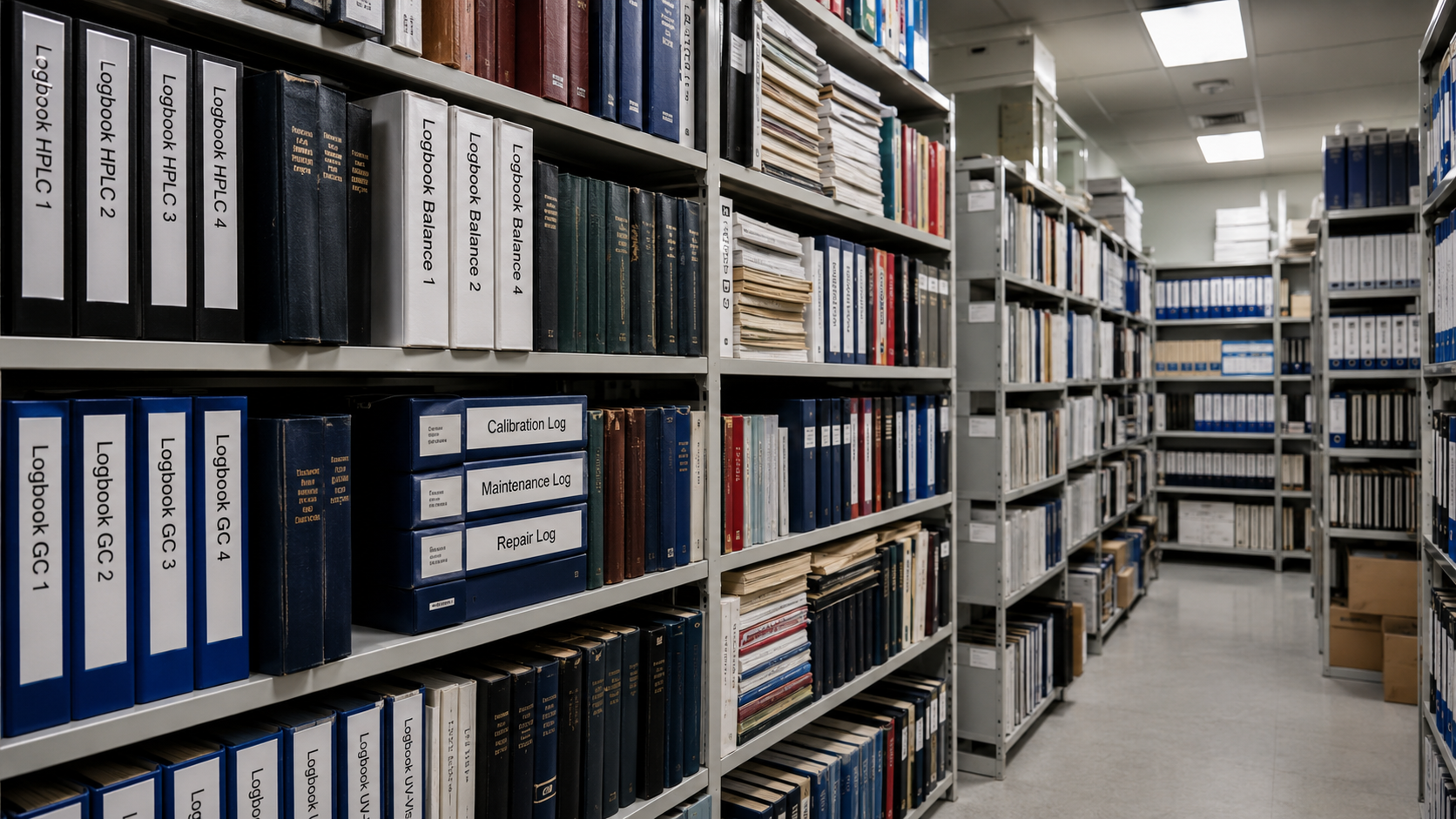
Traditionally, technical logbooks are kept on paper. A physical logbook sits next to each instrument, and maintenance, calibration, repairs, and deviations are written in by hand. It looks pragmatic until it collides with two realities of the regulated world: data integrity and mandatory archiving.
Paper logbooks are GxP-relevant records. They carry the same requirements as batch records, analytical results, or validation data – retention periods of 10, 15, or more than 20 years, protection against loss, damage, and unauthorized changes, and availability for audits and inspections at any time.
Because lab instruments often stay in service for decades, a single logbook per instrument rarely lasts. Multiple volumes accumulate per device, and with roughly a hundred instruments in a lab, that quickly adds up to 100 to 200 physical logbooks to manage and archive. The result is growing archive volume, rising storage and administration costs, time-consuming audit preparation, and increased compliance risk the moment a document is damaged or goes missing.
The solution: a digital lab logbook with LabThunder
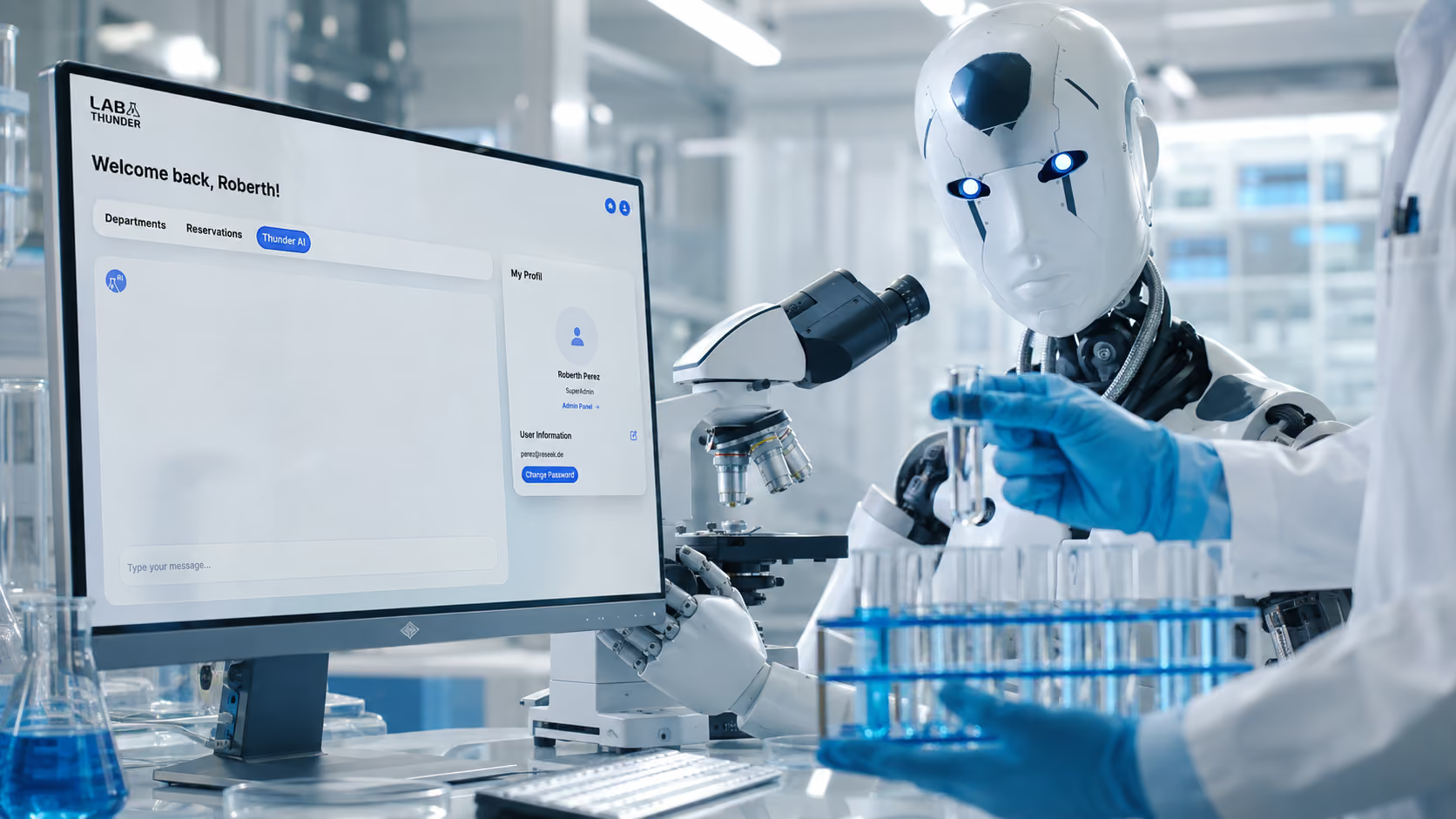
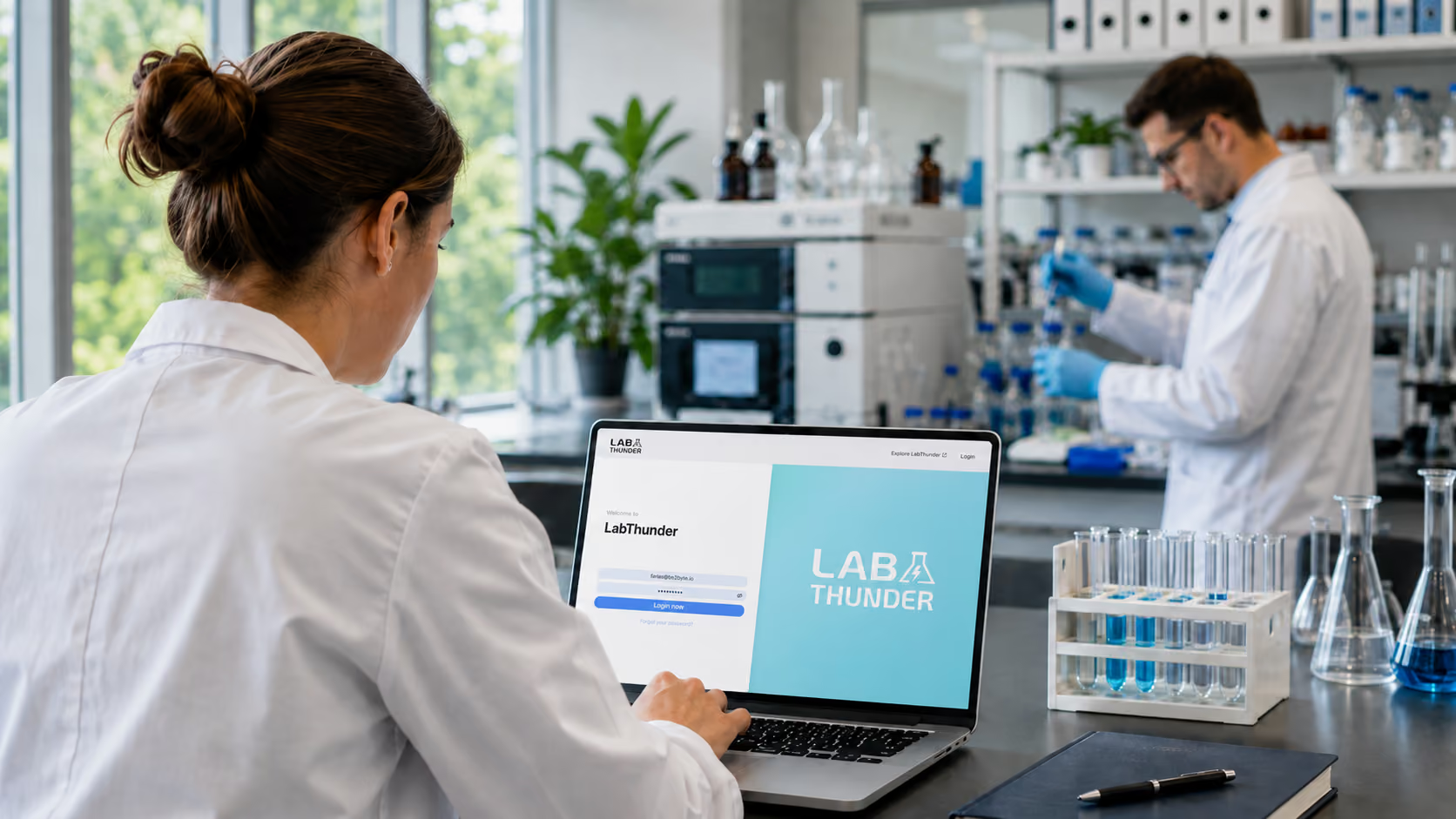
LabThunder is a fully digital system for technical logbooks, built specifically for GMP- and GLP-regulated environments. Instead of handwritten entries in physical books, it produces electronic, structured, compliant documentation that captures the complete lifecycle of every instrument – from installation and commissioning through qualification, validation, maintenance, and calibration, to repairs, deviations, upgrades, and decommissioning.
The real difference from paper is not that things get documented, but how. In LabThunder every entry is searchable, consistently recorded, access-controlled, and traceable – and ready for long-term digital archiving from the start.
[[image-1]]
Equipment management, rethought
The value of a digital TechLog goes well beyond record-keeping and shows up in three places in daily lab work.
In daily operation, the friction disappears. Instead of digging through a cabinet, the team pulls up any instrument's information directly; upcoming maintenance and calibration flag themselves automatically, and the status of every instrument sits in one central view. Illegible handwriting as a source of error is gone.
For compliance and data integrity, the system delivers what paper structurally cannot: full audit trails for every change, electronic signatures under 21 CFR Part 11, and consistent documentation quality that measurably lowers the risk of compliance violations.
And within laboratory IT, equipment management slots in cleanly – with connections to LIMS, QMS, and other systems, standardized processes across every site, and better data quality driven by structured input rather than free text.
From TechLog to compliant archive
The full efficiency gain only appears when digital equipment management and GMP-compliant archiving work together. When an instrument reaches the end of its lifecycle, the TechLog is finalized and can be transferred as a whole into a digital archive – for example the Watcher Archive by biomedion, where metadata is enriched and retention rules are applied automatically. A break in the process – instrument retired, logbook sent to storage – becomes one continuous, controlled handover.
Bild anzeigen
This image is a thing of the past. Digital laboratory notebooks combined with GxP-compliant archiving let you eliminate entire chains of paper-intensive processes.
Measurable benefits for your lab
The switch pays off in four ways. Costs drop as physical archive space for logbooks disappears, administration is automated, and audits take less time. Efficiency rises because documentation time itself falls: modern logbook systems suggest entries, work from stored standard texts, and are available over the internet anytime, anywhere – instead of at the cabinet next to the instrument. Compliance confidence rises through controlled lifecycle management, redundant storage that protects against data loss, and audit-readiness at any time thanks to instant access. And scalability is built in: the system grows without additional physical space, stays independent of any single system's runtime, and works across all sites.
The path to switching over
Adoption follows a clear path: inventory every instrument and logbook in use, roll out LabThunder step by step, train staff for consistent use, migrate critical historical data, and keep adapting to new requirements. No big bang – a controlled replacement of paper, instrument by instrument.
Conclusion
Digital equipment management is no longer a nice-to-have. Where traceability is legally required and retention runs for decades, the paper logbook turns from a simple tool into the real cost driver and risk factor. With LabThunder, regulated labs gain complete digital lab equipment management, seamless archiving, and durably lower costs – trading growing paper archives for a scalable, compliant strategy.
Typische Fragen zum digitalen Prüfmittelmanagement im Labor
How do we move from paper to a digital system?
Step by step: inventory every instrument and logbook, roll out LabThunder gradually, train staff, migrate critical historical data, and keep refining. Paper is replaced instrument by instrument – no big bang.
How does a digital logbook connect to LIMS or QMS?
LabThunder is built to integrate with LIMS, QMS, and other lab systems, standardizing processes across sites and improving data quality through structured input rather than free text.
Is a digital lab logbook 21 CFR Part 11 compliant?
LabThunder captures entries with full audit trails and electronic signatures under 21 CFR Part 11, plus access-controlled, traceable history – the foundations for use in regulated environments.
Why replace the paper equipment logbook?
Paper logbooks are GxP-relevant records with retention periods that can exceed 20 years. With a hundred instruments, hundreds of physical volumes pile up – driving space, cost, and audit effort, and risking damage or loss over time.
What is lab equipment management in a regulated lab?
Lab equipment management is the complete documentation and monitoring of every instrument used in GMP or GLP processes, across its full lifecycle from installation to decommissioning. At its core is the technical logbook, which records qualification, calibration, maintenance, repairs, and deviations.