
Data-Driven Decision-Making in the Laboratory
.jpg)
We all know the problem: the equipment in our lab has reached the end of its lifespan, and it's time to think about new investments again. This often means significant (re)capex expenditures – whether for replacing or upgrading systems. However, deciding when and how much equipment to purchase can be challenging. Gut feelings or impulsive decisions can quickly become costly.
Fortunately, there's a better way: Data-Driven Decision Making (DDDM). In this article, we explain how targeted data analysis and centralized management of your laboratory equipment can help you not only make the right decisions but also achieve significant cost savings.
Data-Driven Decision Making and Asset Management in the Lab
Data-driven decision-making – it sounds complex at first, but the basic idea is simple. Instead of making decisions based on gut feeling or mere assumptions, these decisions are based on solid, well-founded data. This approach is becoming the norm in more and more industries because it significantly improves the accuracy and traceability of decisions.
For laboratories, this means:By systematically collecting and analyzing data, you can, for example, determine which devices are actually being used to their full capacity and which are not. This allows you to make precise investment decisions and avoid over- or underutilization. In short, you maximize the return on investment (ROI) of your assets.
This is how data-driven decision making works:
1. Data collection: It all starts with the collection of relevant data. In a laboratory, this could involve recording usage data and maintenance logs of laboratory equipment.
2. Analysis: In the next step, this data is analyzed – ideally using modern software solutions. Statistical methods and analysis tools help to identify patterns and draw well-founded conclusions.
3. Decision-making: Based on these analyses, you make well-founded decisions that are based not only on assumptions, but on hard facts.
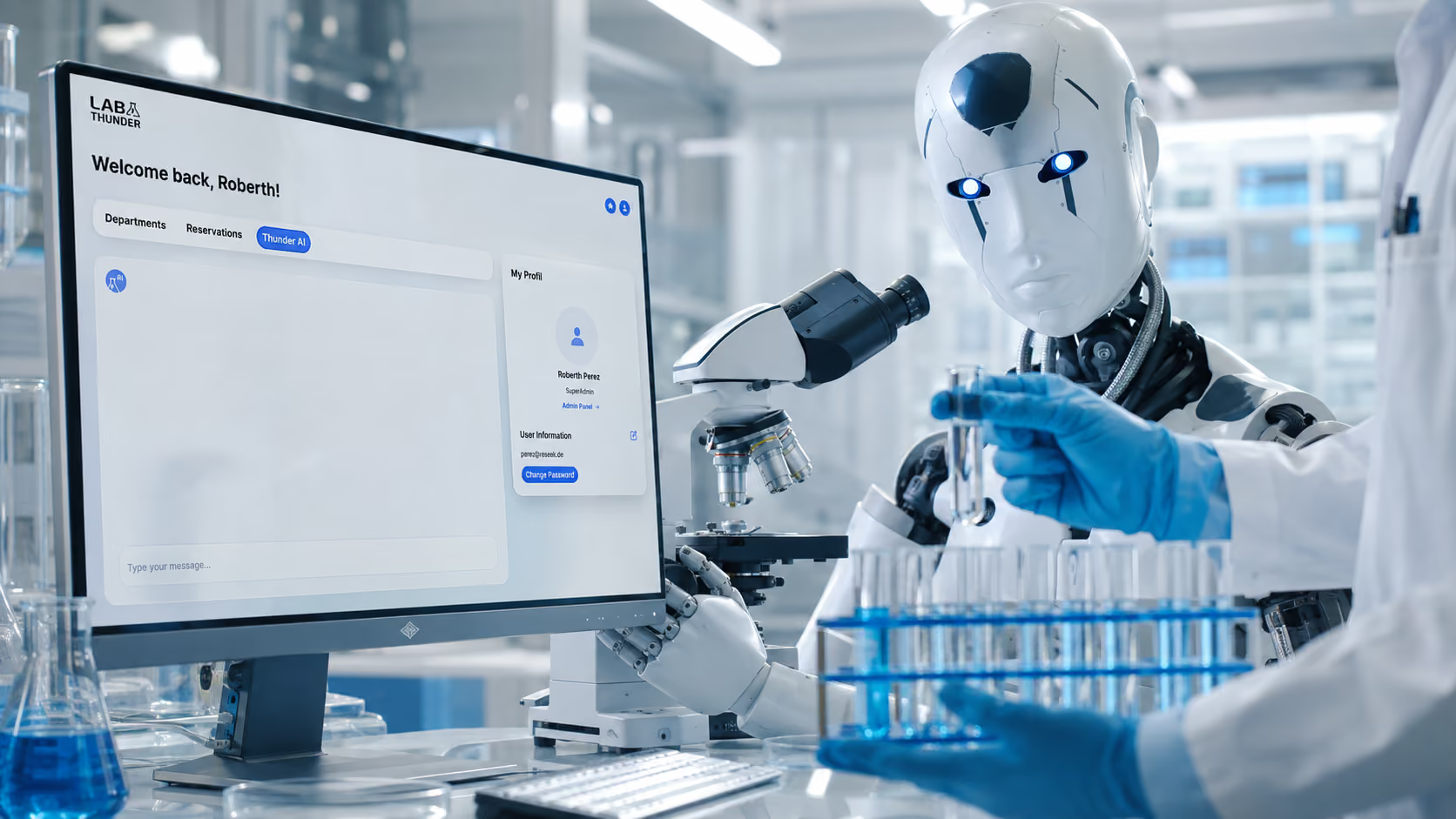
Whether in the lab or elsewhere – the potential is enormous. Companies in marketing use DDDM to better understand their target groups. Banks use data to assess risks. And in the lab? Here, this method makes it possible to optimize equipment usage, precisely plan maintenance, and avoid unnecessary expenses.
[[image-1]]
Laboratory Asset Management – more than just centralized management of laboratory equipment!
Asset management goes far beyond simply counting and managing devices. It encompasses the systematic management of central assets. ValuesA laboratory's asset management encompasses everything from data acquisition and usage to knowledge retention. Efficient asset management maximizes the value of your laboratory equipment and extends its lifespan – saving you real money.
What does this mean specifically for your laboratory?
1. Inventory: Every device, machine and instrument is recorded – including specifications, location and area of use.
2. Maintenance and calibration: Regular maintenance is key to avoiding costly breakdowns. Preventive maintenance not only keeps your equipment running longer but also increases the accuracy of your research results.
3. Usage monitoring: Which devices are actually used frequently? Which are subject to peak usage? This information helps to avoid unnecessary purchases and to plan the purchase of new systems precisely.
4. Lifecycle management: Every device goes through various phases – from acquisition and use to disposal or reuse. Good lifecycle management ensures that you use your resources optimally.
Systematic asset management not only increases operational efficiency but also improves the quality and reliability of your research. A well-maintained and optimally utilized laboratory saves costs and delivers better results – a win-win situation.
Time constraints as a bottleneck – efficiency through data-driven decision making
Time is often a scarce commodity in the laboratory. Staff are overworked, and there is a dwindling number of personnel available to take on the workload. Many laboratories are therefore under intense pressure to cut costs and optimize processes.
Especially in the pharmaceutical industry, laboratories are the linchpin of quality control. But although these laboratories are essential, they incur high costs and are therefore constantly the focus of optimization efforts. This is where data-driven decision making comes into play, helping laboratories to optimize resource utilization and use time more efficiently.
But that's easier said than done: Collecting and analyzing data is often time-consuming and complex. Without the right tools and methods, the process can quickly take days or even weeks.
Example: Capacity expansion of an HPLC laboratory
Imagine your lab staff are complaining about insufficient liquid chromatography capacity. Sample volumes are increasing, and you have to decide: Do we need more instruments? If so, how many? Does it make sense to stick with the current manufacturer, or are there more cost-effective alternatives?
These are certainly important questions – and a gut feeling will hardly be the right solution. The solution? Data-driven decision making.
But how do we implement this in practice? One possibility would be to check system utilization. Often, the number of injections is used as a metric to determine utilization. However, this isn't always accurate, as the methods and run times in chromatography vary considerably depending on the product. Some methods take minutes, others over an hour.
Furthermore, reservation times, loading times, and other factors are often overlooked. We quickly reach our limits with mere estimates and gut-feeling factors. For truly informed decisions, we need a more precise data foundation.
The solution: A solid data foundation for all laboratory equipment
If we truly want to rely on data-driven decision-making, we need a detailed data foundation. This means we need to know not only the utilization of our HPLC instruments, but also the usage of other critical equipment such as centrifuges, dissolution testers, or UV spectrometers.
The challenge? Often, there's no suitable software available for many of these systems to measure usage or capacity. This leads to the next bottleneck: How do we collect the data? Without the right tools, planning data-driven decision-making can quickly become overwhelming.
The answer: LabThunder
This is where LabThunder comes in. This software solution was specifically developed to support laboratories in data acquisition and decision-making. While SAP and other systems often stop at analyzing laboratory equipment, LabThunder goes a step further – directly to the device itself.
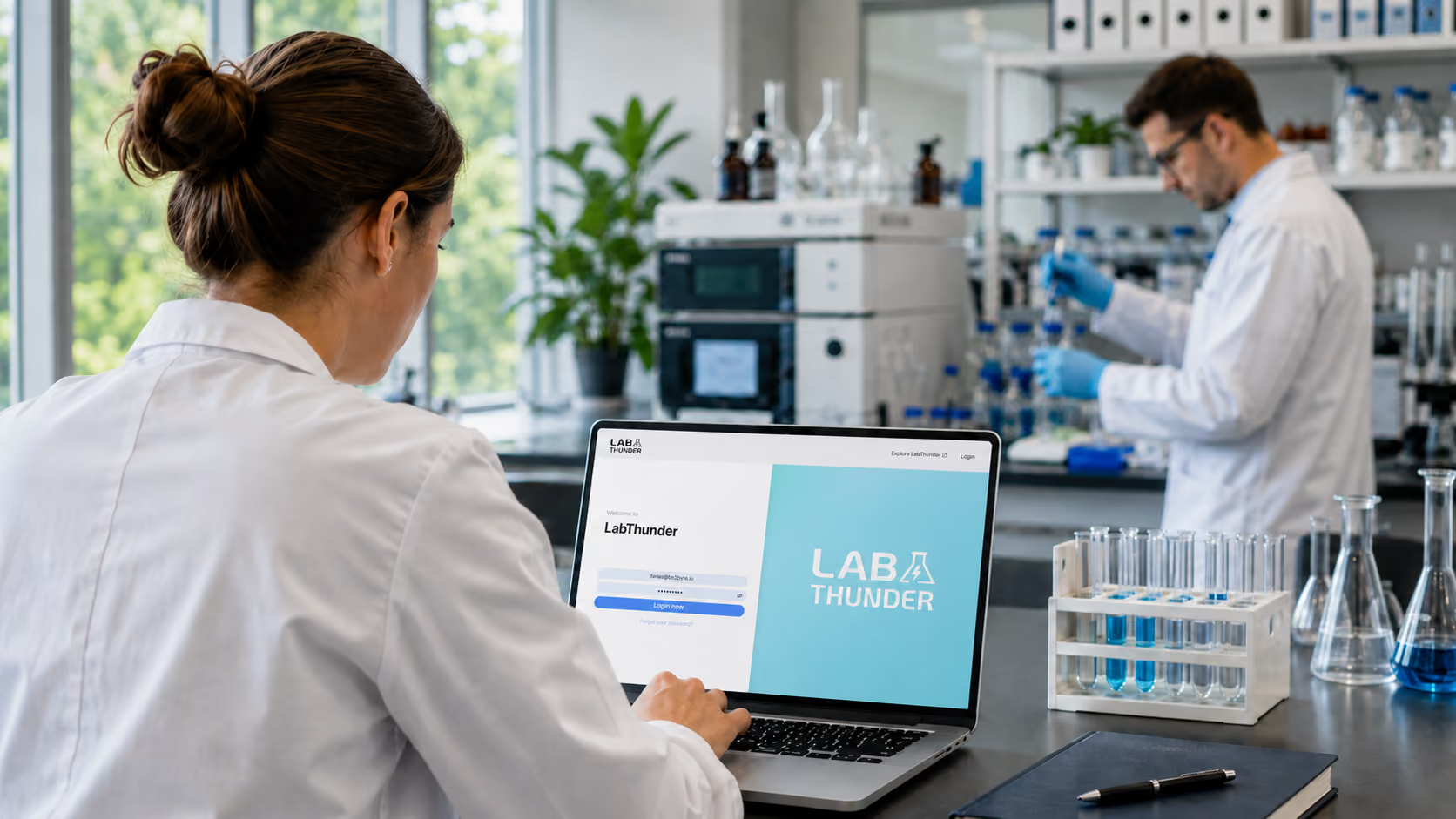
LabThunder combines asset management and data-driven decision-making in a single platform. Valuable data is captured effortlessly via the booking system and technical log function. The utilization, malfunctions, maintenance, and cost factors of all laboratory equipment are documented centrally and automatically. This not only simplifies the decision-making process but also increases the productivity of the entire laboratory.
LabThunder lets you know exactly:
• How long a device was out of service each month
• Which devices cause the most maintenance costs
• Which employees most frequently block devices
• And which systems urgently need to be replaced.
With this information, you kill several birds with one stone: data-driven decision-making, asset management, and the optimization of lab utilization. And last but not least, you take another step towards a digital lab.
Conclusion: Use the power of data for your laboratory
Data-driven decision-making is not just a buzzword, but a valuable tool that helps you make informed decisions and make your lab more efficient. Combined with well-planned asset management, you can not only save costs but also maximize the lifespan of your equipment.
LabThunder provides you with the necessary tools to implement this transformation in your laboratory. Let's work together to future-proof your lab – more efficient, data-driven, and sustainable.
Feel free to contact us for a free consultation. We'll help you take the next step towards data-driven decision-making – and raise your laboratory to a new level of efficiency.

.jpg)