
The Biggest Challenges of Digital Transformation in the Laboratory

The biggest hurdles of digital transformation in the laboratory
In an era where digital technologies are driving innovation and streamlining processes in virtually every industry, the laboratory sector lags behind in many areas. While other industries have already modernized their workflows, many laboratories face significant challenges when it comes to digitizing their processes. Particularly in laboratories, where precision and reliability are paramount, there is often resistance to new technologies such as cloud computing, the Internet of Things (IoT), and mobile applications.
Why is digitalization often so difficult in the laboratory environment? Why are there so many reservations despite the obvious advantages, such as increased efficiency and better data utilization? In this article, we explore the biggest hurdles hindering progress in laboratories. These include technological, organizational, and human factors. We also present potential solutions for overcoming these obstacles and successfully implementing digital transformation.
Fear of the internet and its risks
Fear of using the internet and cloud software solutions is one of the biggest obstacles to the digitalization of laboratories. Many laboratory staff and decision-makers fear that sensitive data, such as research results or patient data, could become vulnerable to hacking or data loss during transmission or storage in the cloud. Especially in highly regulated industries, such as pharmaceuticals or food, the protection of sensitive data is essential, and the idea of making this data accessible via the internet often causes concern.
Solution approach:
- Education and trainingTo counteract these fears, it is important to comprehensively inform employees about the current security standards of cloud providers and internet services. Most cloud providers work with state-of-the-art security protocols, such as...End-to-end encryption and Multi-factor authentication, which offer far more protection than a local network can often guarantee.
- Data protection and complianceFor many laboratories, it is reassuring to know that cloud service providers not only adhere to strict standards.Data protection lawsNot only should systems comply with regulations, but they should also be regularly audited for security vulnerabilities by independent bodies. The introduction of IT security training and regular security audits can also help strengthen employee trust in digital systems.
Tablets and mobile phones in the laboratory: Hindering and difficult
The use of mobile devices, such as tablets and smartphones, could theoretically contribute to more efficient work in the laboratory. Employees could collect data on the go, control laboratory equipment, or view information in real time. In practice, however, there are obstacles: Tablets and smartphones are often not robust enough for use in a laboratory where chemicals, liquids, or biological substances are handled. Furthermore, wearing protective gloves often makes operating the devices difficult, and there is a risk of contamination.
Solution approach:
- Specialized laboratory hardwareThere are now a large number of robust devices specifically designed for laboratory environments that are resistant to dust, moisture, and chemicals. These specialized devicesLabortabletsThey often have washable surfaces and can be operated while wearing gloves. Using such devices allows laboratories to benefit from digitalization without compromising safety standards.
- Touchless operationAn emerging trend is the integration ofcontactless control technologies or Voice controlThese devices allow laboratory staff to operate equipment or collect data without physical contact with a screen. This not only reduces the risk of contamination but also facilitates operation under difficult working conditions.
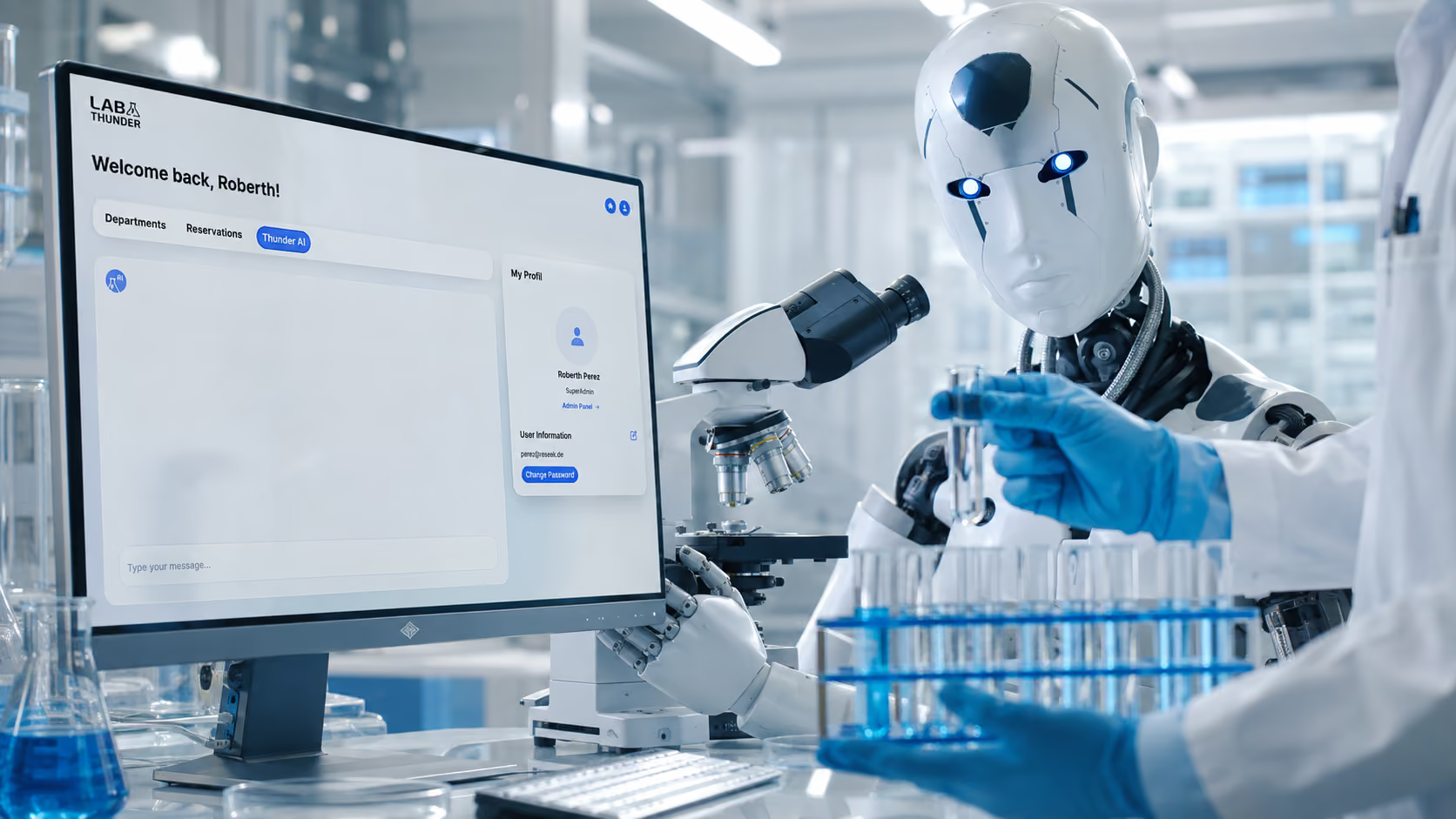
[[image-1]]
IoT in the lab: Integration is difficult due to many standalone devices
The Internet of Things (IoT)IoT, in which devices are networked and centrally controlled, has enabled great progress in many industries. However, integrating IoT into laboratories is often difficult, as many laboratory devices such as drying ovens, centrifuges, or pipetting stations are only available as...Standalone systemsThese devices do not function. They are not designed for networking and therefore cannot be easily integrated into a digital system.
Solution approach:
- Retrofittable IoT solutionsMany manufacturers now offerRetrofit kitsor modules that enable older laboratory equipment to become IoT-enabled. These modules collect the relevant data and transmit it to a central platform where it can be analyzed and stored. This allows laboratories to benefit from the IoT without having to replace their entire equipment infrastructure.
- Strategically plan equipment purchasesLaboratories should think long-term when purchasing new equipment and focus specifically onIoT-compatible modelsThese devices can be seamlessly integrated into digital systems, enabling the automation and optimization of processes. Furthermore, they allow for improved monitoring and maintenance, as they can detect and report problems early.
Problems with the data standard of analysis systems
Another major hurdle in the digital transformation of laboratories is the lack of compatibility between different analytical systems. Many laboratories use different software solutions and instruments that output their data in different formats. The lack of a standardized system is a significant obstacle.Data standardsThis makes the integration of the systems more difficult, as the data has to be converted or adapted manually.
Solution approach:
- Introduction of standard formatsThe development and implementation of open standards, such asANIML (Analytical Information Markup Language) or JCAMP-DXThis can help facilitate the integration of different systems. These standards are specifically designed to standardize data formats and enable data exchange between different analysis systems.
- Middleware solutionsAnother way to facilitate data integration is toMiddleware-Softwareto be used. This software serves as an interface between different systems and converts the data into a compatible format. In this way, even older devices and systems can be integrated into a modern digital network.
Staff are not on board and are reluctant to try new approaches.
The human factor is often the biggest hurdle in digitalization. Long-term employees, in particular, struggle to adopt new technologies and ways of working. The feeling of having to abandon tried-and-tested methods leads to uncertainty and resistance. This can hinder the entire digitalization process, as many new systems depend on acceptance and regular use.
Solution approach:
- Early involvement of employeesIt is crucial to involve staff in the digitalization process from the very beginning. Transparent communication and training can alleviate fears and concerns. Show employees how the new technologies can simplify their daily work and lead to better results.
- Gradual transitionA phased implementation of new systems can help avoid overwhelming staff. Start with smaller changes and gradually expand digitalization. This way, staff can become accustomed to the new processes, and the transition will be smoother.
Inadequate internal infrastructure
Many laboratories still work with outdated equipment.IT infrastructures...which are not up to the demands of modern cloud or IoT systems. Slow networks, outdated servers, and a lack of connectivity make it difficult to implement new technologies. The result is slow data processing, frequent outages, and high maintenance costs.
Solution approach:
- modernizing infrastructureThe first step towards successful digital transformation is modernizing internal infrastructure. This includes fast internet connections, high-performance servers, and modern network technology. A robust infrastructure is the foundation on which new technologies can be built.
- Cloud-based systemsTo relieve the burden on local IT infrastructure, laboratories can also useCloud-based solutionsCloud systems eliminate the need for expensive on-premises hardware while still providing access to powerful computing resources and storage solutions. This reduces maintenance costs and enables flexible scalability.
Management fears exploding costs.
The introduction of new technologies requires investment, and many CEOs fear that the costs of digitalization could spiral out of control. Especially when unforeseen expenses arise, concerns about losing budget control increase.
Solution approach:
- Thorough cost-benefit analysisA carefulCost-benefit analysisThis can help to dispel concerns. It's important to consider not only the initial investments but also the long-term savings, such as those achieved through more efficient processes, reduced downtime, and fewer manual steps. Often, it turns out that digitalization offers significant long-term savings potential.
- Flexible payment optionsMany providers of cloud and IoT solutions now offerflexible payment models an. Pay-as-you-go-ModelleFor example, they allow you to pay only for resources actually used. This makes costs more transparent and predictable, which lowers the barrier to investment.
Conclusion
Digital transformation in the laboratory environment is fraught with numerous hurdles, ranging from technological challenges to human reservations. However, with a clear strategy, the right technology, and open communication, these obstacles can be successfully overcome. The benefits of digitalization—from increased efficiency to improved data integration are immense and will optimize laboratory operations in the long term.

.jpg)