Laboratory Management Software – Digital Solutions for Efficient and Standards-Compliant Laboratory Administration
Introduction – Why laboratory management software is indispensable today
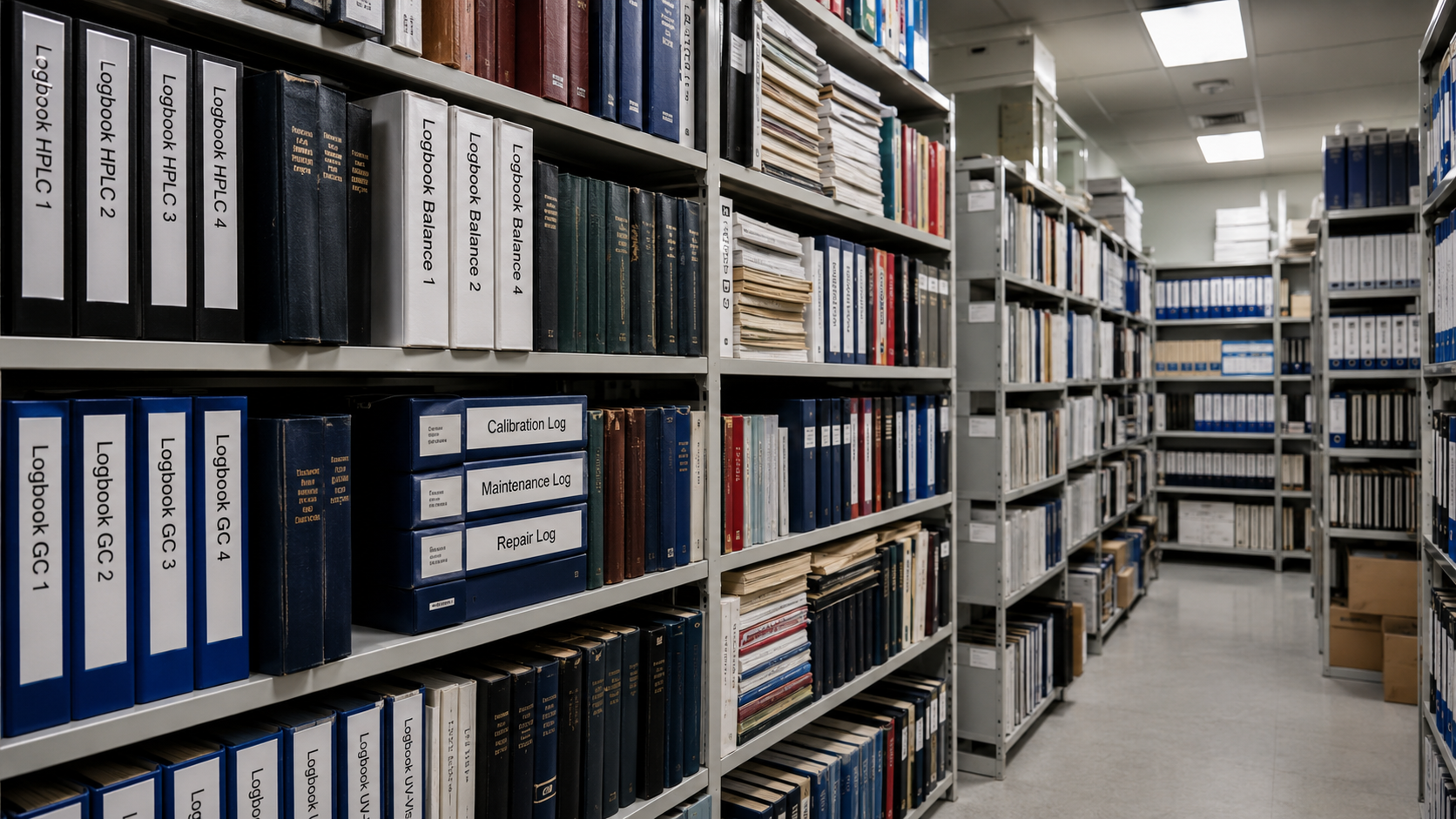
Laboratories today face growing challenges: Quality assurance requirements are constantly increasing, qualified specialists are becoming scarcer, and the equipment landscape is becoming ever more complex. At the same time, strict standards such as ISO 17025 and ISO 15189 must be adhered to – often still with paper-based processes or disjointed Excel spreadsheets.
This is where modern laboratory management software comes in: It brings structure to daily workflows, creates transparency across all processes, and forms the foundation for sustainable quality assurance. Digitalization in the laboratory is no longer an optional extra, but a necessary basis for efficient, safe, and audit-proof work.
What is laboratory management software?
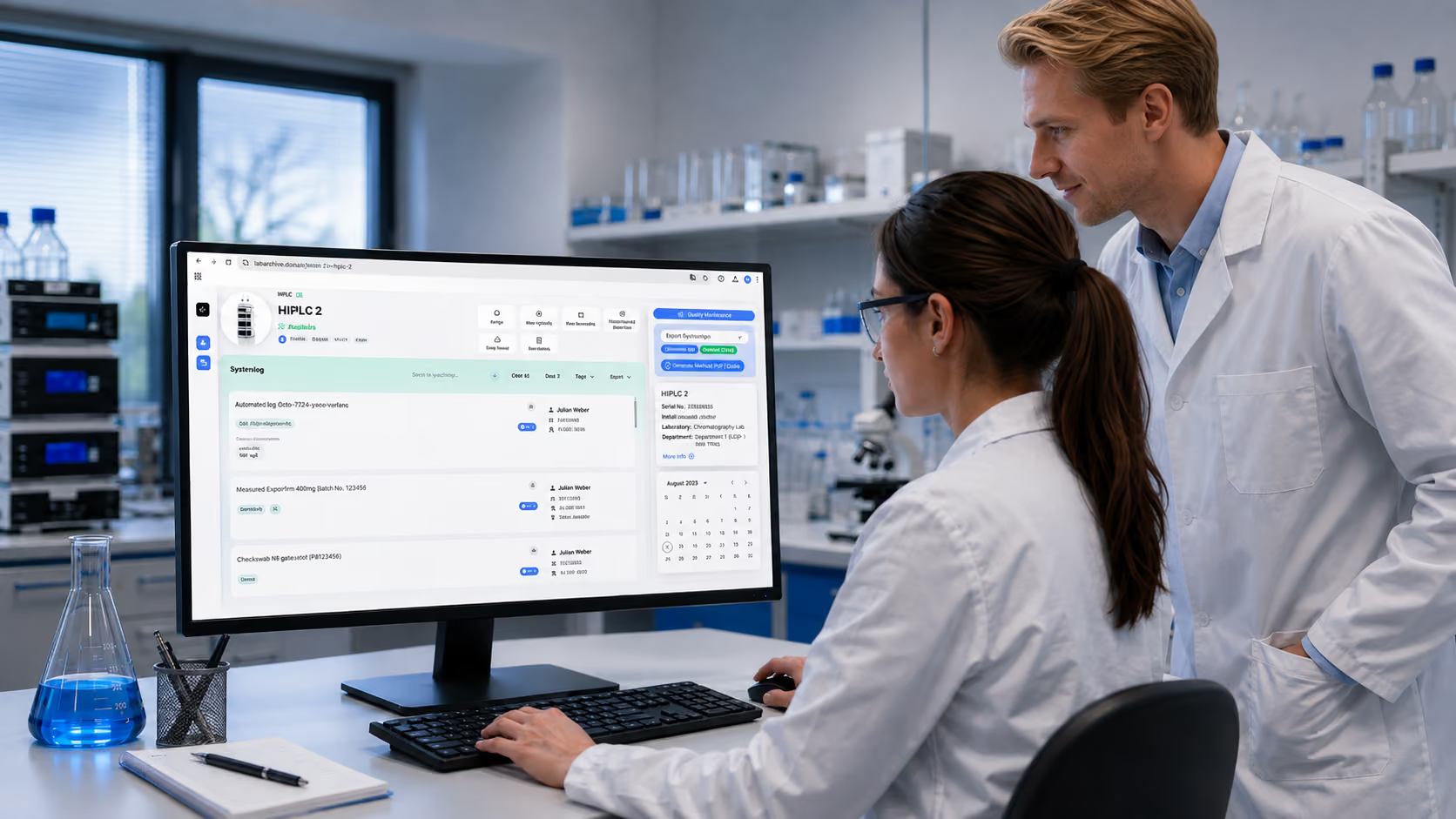
Laboratory management software is a central digital platform that brings together all essential aspects of laboratory organization: from resources and equipment to documents, responsibilities, and processes.
Important distinctions:
- Excel-ListenThey offer flexibility, but are prone to errors, not audit-proof, and do not allow for automation.
- LIMS (Laboratory Information Management Systems)They primarily focus on managing samples and analysis results.
- Labormanagement SoftwareThis functionality extends to essential areas such as equipment management, maintenance planning, test equipment management, and the organization of roles and responsibilities.
It thus forms the organizational backbone of professional laboratory management and supports both managers and operational teams in their daily business.
[[image-1]]
The role of laboratory digitization in the modern laboratory
Laboratory digitization means far more than simply doing away with paper. It's about intelligently networking information and making processes transparent.
Concrete advantages in practice:
- Centralized data storage replaces fragmented, isolated solutions
- Faster and more up-to-date access to device status and history
- Drastic reduction of manual transmission errors
- Clear transparency regarding responsibilities and accountabilities
- Time savings through automated routine tasks
A key element in this is Lab Equipment Management: All information on devices, upcoming maintenance, calibrations performed and any shutdowns is traceable and fully documented at all times.
Test Equipment Management Software & Test Equipment Administration Software
Test equipment management encompasses the complete life cycle of a measuring or testing device in the laboratory:
- Procurement and initial commissioning
- Qualification for the intended area of application
- Regular calibration to ensure measurement accuracy
- Scheduled maintenance and repairs, if necessary.
- Documented decommissioning
Test equipment management software digitally maps this entire cycle. It not only records the current status, but also documents the history, responsibilities, and all relevant status changes.
Digital test equipment files typically contain:
- Calibration certificates with all technical details
- Evidence of completed maintenance
- Defined application areas and measurement ranges
- Documented deviations and measures taken
- Release status and usage restrictions
Test equipment monitoring & calibration – compliant with standards & audit-proof
Systematic test equipment monitoring is a key requirement of the ISO 17025 and ISO 15189 standards. Specialized test equipment monitoring software supports laboratories in this process on several levels:
- Automatic deadline monitoring:The system continuously monitors all calibration deadlines and reports upcoming dates in a timely manner.
- Early warnings:Laboratory staff receive notifications before deadlines actually expire.
- Automatic lockouts:If the calibration expires, the test equipment is automatically blocked from use.
- Complete documentation:Every action, every status change is automatically logged.
This ensures that only approved testing equipment suitable for the respective purpose is used – a crucial factor for valid measurement results and safety during audits.
Risks without digital laboratory management software
Laboratories that operate without structured laboratory management software expose themselves to several risks:
Excel-Chaos:Different versions and conflicting data lead to uncertainty and incorrect decisions.
Lack of traceability:Calibration histories and maintenance records cannot be quickly and completely verified.
Audit Findings:Incomplete or inconsistent documentation is a negative factor during inspections and audits.
Unnecessary costs:Unplanned downtime, missed maintenance appointments, and emergency calibrations cause avoidable expenses.
Quality and safety risks:The use of uncalibrated or unsuitable testing equipment jeopardizes the reliability of measurement results.
Especially in regulated sectors, such weaknesses can quickly lead to serious problems.
Advantages of modern laboratory management software
A modern solution for laboratory management offers measurable added value on various levels:
Efficiency gains:Significantly reduced search times, clear processes and automated routine tasks noticeably relieve the team.
Process clarity:Defined responsibilities and documented processes create security for all involved.
Audit security:Structured and readily available evidence significantly facilitates both internal and external audits.
Compliance support:The software actively helps to meet the requirements of ISO 17025 and ISO 15189.
Automated test equipment monitoring:Calibration deadlines and maintenance dates are reliably monitored without the need for manual checks.
Improved cooperation:Transparent information promotes communication and coordination within the team.
Important functions that laboratories should pay attention to
When selecting suitable laboratory management software, the following core functions should be considered:
Central, structured database:All relevant information is available in one place and is consistent.
Calibration and maintenance planning:Automatic scheduling and reminders for upcoming appointments.
Role and rights management:Differentiated access rights according to responsibilities.
Audit trail and change tracking:Every change is logged with a timestamp and user.
Integrated document management:Certificates, reports and proofs are directly linked to the devices.
Interfaces to existing systems:Integration with LIMS, ERP or other specialized systems for seamless processes.
ISO 17025 & ISO 15189 – how software supports implementation
Both standards set clear requirements for laboratory organization:
- Use of suitable and regularly monitored testing equipment
- Documented and traceable processes
- Transparent decision-making processes
- Clearly defined competencies and responsibilities
Laboratory management software significantly supports the practical implementation of these requirements: It automatically provides the necessary documentation, standardizes processes across the entire laboratory, and makes deviations immediately visible – without creating additional documentation effort. This not only simplifies daily work but also ensures that all relevant information is readily available during audits.
Introduction & Change Management
The success of new software depends not only on its functions, but above all on the people who work with it:
Early involvement:Involve your employees in the planning phase and listen to their practical experience.
Clear communication:Explain clearly what specific benefits the software offers for everyday laboratory work.
Targeted training:Provide sufficient time and resources for onboarding and training.
Joint process definition:Develop the new digital processes together with the team, not over their heads.
When digitalization is experienced as a genuine relief and not as a control instrument, acceptance increases significantly.
Practical examples / Use cases
Example 1: Calibration period expires
The system automatically detects that the calibration of an important measuring device expires in three weeks. The responsible employee receives a notification and can schedule the appointment in good time – instead of having to react at the last minute.
Example 2: Device is locked
A measuring instrument has exceeded its calibration period. The software automatically locks it from further measurements. This prevents erroneous results. It will only be released again after successful recalibration.
Example 3: Audit preparation
An external audit is coming up. Thanks to digital lab management, all test equipment files, calibration certificates, and maintenance records are available with just a few clicks. The auditors receive complete and consistent documentation.
Conclusion
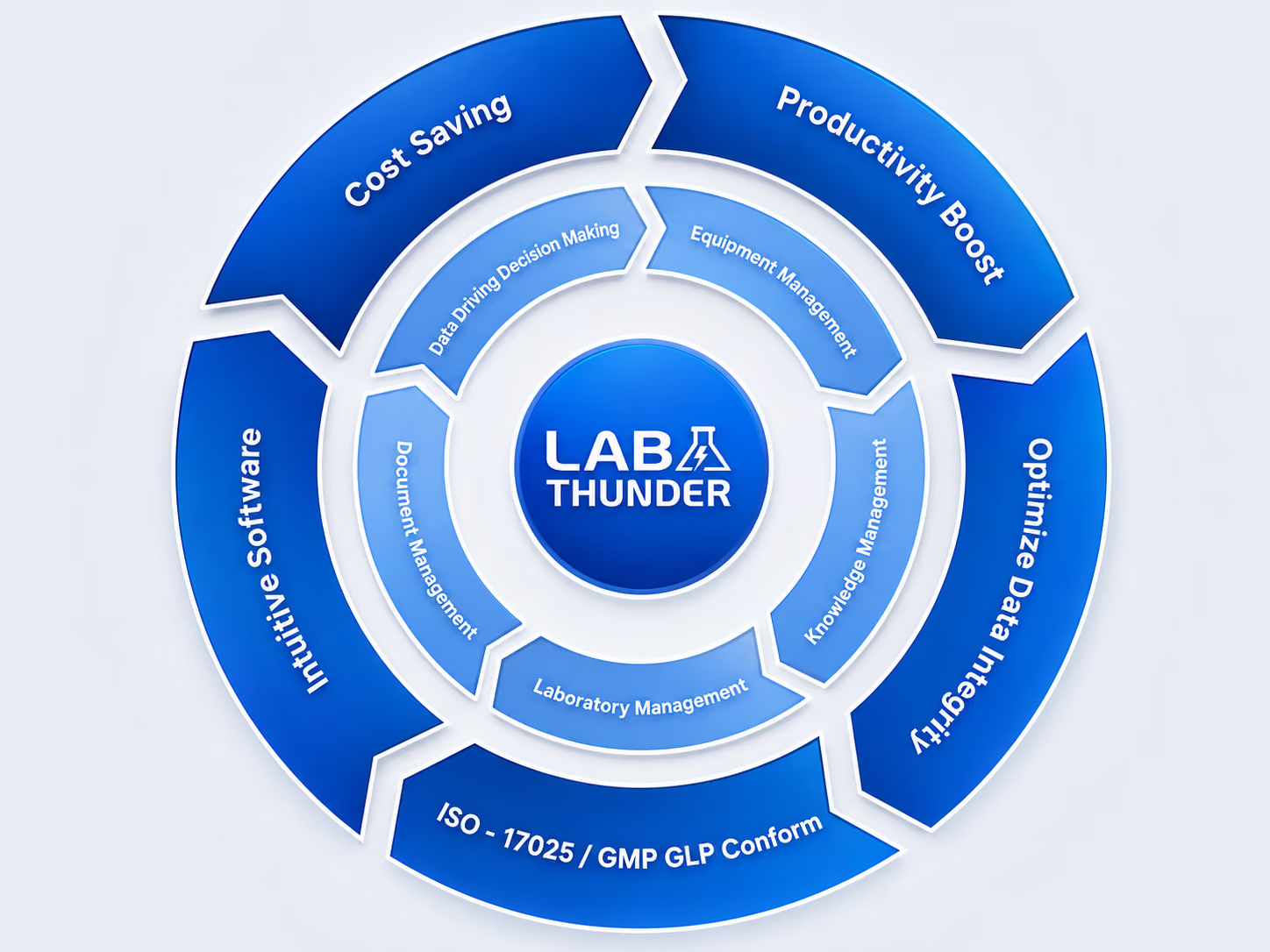
Laboratory management software is now an indispensable component for laboratories that want to operate efficiently, safely, and in compliance with standards. It combines laboratory digitization, lab equipment management, and test equipment monitoring into a coherent overall system.
Anyone who wants to ensure quality in the long term, reduce costs, and confidently pass audits cannot do without structured digital laboratory management. Investing in professional test equipment management software and a well-thought-out test equipment management system quickly pays off through increased transparency, fewer errors, and improved efficiency.
Häufige Fragen zu Labormanagement-Software und digitaler Laborverwaltung
What is laboratory management software?
Laboratory management software is a digital platform for the centralized organization of all laboratory processes, resources, equipment, documents, and responsibilities. It goes beyond simple sample management to include equipment management, maintenance scheduling, and quality assurance.
What is part of test equipment management?
Test equipment management covers the entire lifecycle of a measuring or testing device: from procurement, qualification, regular calibration, and maintenance, all the way to decommissioning. Every step is documented to ensure full traceability.
What role does ISO 17025 play in the laboratory?
ISO 17025 is the international standard for the competence of testing and calibration laboratories. It defines requirements for quality management, technical competence, and the reliability of test results. Accreditation to ISO 17025 is required in many sectors.
What is test equipment monitoring?
Test equipment monitoring refers to the systematic control of all measuring and testing equipment with regard to calibration intervals, technical condition, and suitability for their intended use. The goal is to ensure that only validated and approved devices are used.
How does software support ISO 15189 compliance?
ISO 15189 is specifically designed for medical laboratories. Laboratory management software supports compliance by standardizing processes, automatically documenting evidence, monitoring equipment, and clearly defining responsibilities. This significantly simplifies both daily operations and audit preparation.