Modern Laboratory Management: 12 Reasons Why a Maintenance Planner Is Essential Today
.avif)
Introduction
Laboratories today face significant professional, economic, and regulatory pressures. Increasing quality requirements, more complex analyses, growing digitalization, and a tightening regulatory framework are changing how laboratories are organized and managed. In this environment, maintenance is no longer a purely technical, peripheral issue. It is a central component of modern laboratory management – with a direct impact on data quality, auditability, costs, and the long-term performance of a laboratory.
A structured maintenance planner forms the backbone of professional equipment and test equipment management. Especially in conjunction with test equipment monitoring, calibration, and measurement equipment management, it becomes clear why simple solutions no longer meet today's requirements.
Maintenance in the context of laboratory digitization and laboratory management
Maintenance as part of holistic laboratory digitization
Laboratory digitization means far more than simply replacing paper with software. The goal of modern laboratory digitization is to map processes transparently, traceably, and in an interconnected way. Laboratory management encompasses organizational, technical, and quality-related aspects equally: from sample logistics and equipment management to the monitoring of testing equipment.
Maintenance in this context is not an isolated process. It directly impacts the availability of equipment, measurement reliability, and the validity of results. Without structured integration into laboratory management, media breaks, information loss, and unnecessary risks arise.
Relationship between maintenance, equipment management and test equipment management
Every analytical system is simultaneously an operating resource and a test instrument. Maintenance intervals, calibration intervals, and the current instrument status are closely linked. Effective test instrument management requires consistent documentation of maintenance histories, calibration status, and approvals. This is precisely where fragmented solutions quickly reach their limits.
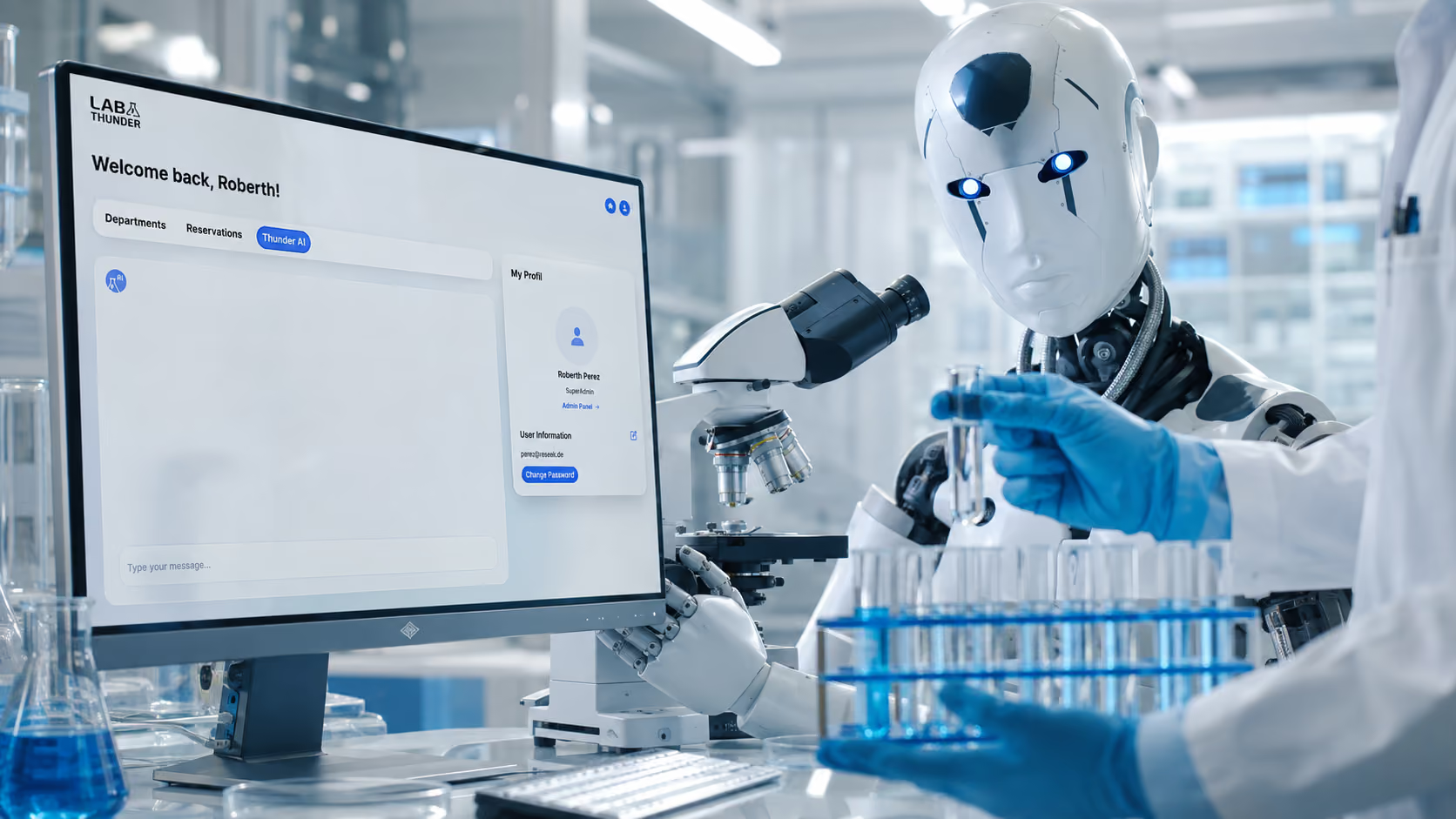
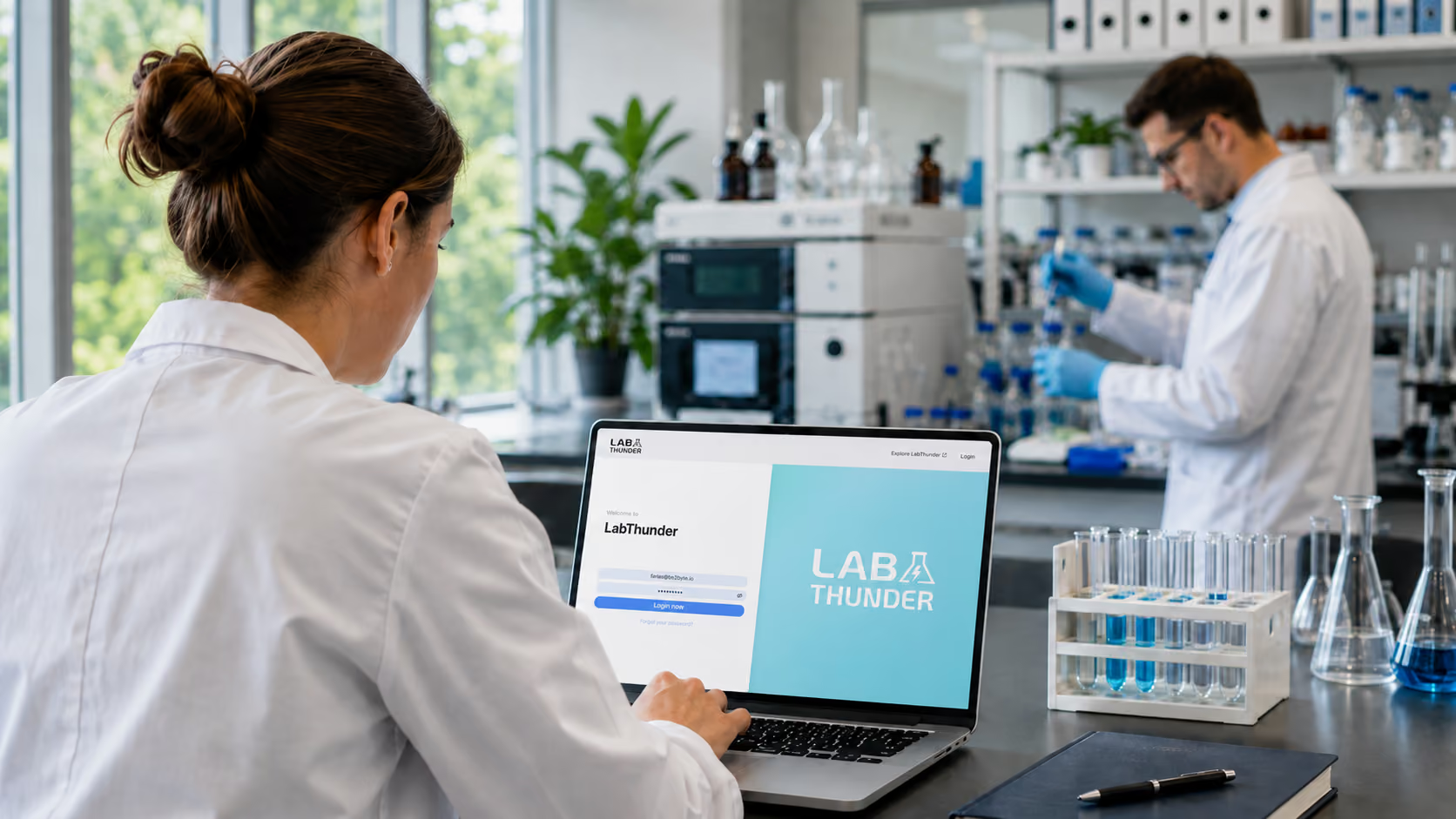
Modern laboratory management software is therefore increasingly pursuing integrated approaches. Platforms like LabThunder demonstrate how maintenance, test equipment monitoring, and equipment status can be combined in a consistent system – without artificially separating these processes.
Maintenance planner and calibration: two sides of the same coin
Why maintenance and calibration belong together
Maintenance ensures the technical functionality of a device, while calibration guarantees its metrological accuracy. Both processes pursue different goals but are inextricably linked from a technical perspective. Calibrating a technically unstable system is just as pointless as using a serviced system without a valid calibration certificate.
Therefore, both aspects must always be considered within the framework of test equipment and measuring equipment monitoring. Maintenance intervals influence calibration intervals, and conversely, calibration results can provide indications of necessary maintenance.
Benefits of a combined maintenance and calibration calendar
An integrated maintenance and calibration calendar provides clarity and planning reliability. It enables:
- early planning of shutdowns
- better coordination with laboratory operations
- Avoiding unplanned downtime
- Clear status statements regarding device usability
From a technical perspective, such a combined approach improves compliance with standards, increases device availability, and reduces operational risks. Modern systems – such as LabThunder – therefore rely on combined calendar and status models to integrate maintenance and calibration processes.
Regulatory framework: Standards and requirements
DIN EN ISO/IEC 17025 as the central reference
DIN EN ISO/IEC 17025 is the relevant standard for testing and calibration laboratories. Among other things, it requires:
- systematic monitoring of test equipment
- documented maintenance and calibration
- Traceability of device states
- Ensuring measurement reliability
In later references, it is often abbreviated to ISO/IEC 17025, DIN EN ISO 17025, or DIN ISO 17025. Regardless of the spelling, the content requirement remains clear: equipment must be suitable, monitored, and maintained in a traceable manner.
Other regulatory contexts
Structured maintenance and test equipment management is relevant even outside of traditional testing laboratories. In a GMP or GLP laboratory, additional requirements apply regarding documentation, traceability, and risk minimization. GLP equipment must maintain a defined status at all times, which can be reliably verified during an audit.
A maintenance planner is therefore not just an organizational tool, but a central compliance tool.
The 12 reasons why a maintenance planner is indispensable today
1. Higher device availability
Planned maintenance reduces unplanned downtime. A maintenance planner ensures that interventions are carried out in a timely manner and that laboratory operations are not unexpectedly interrupted.
2. Ensuring measurement reliability and data quality
Only properly maintained and calibrated systems deliver reliable results. Maintenance is therefore a direct factor in the quality of analytical data.
3. Systematic monitoring of test equipment
A maintenance planner supports structured monitoring of test equipment and facilitates compliance with defined intervals for maintenance and calibration.
4. Auditability and traceability
Audits require complete documentation. Maintenance histories, status changes, and approvals must be traceable – a clear advantage over unstructured lists.
5. Better cost control
Planned maintenance is cheaper than emergency repairs. Furthermore, service costs, spare parts, and external services can be evaluated transparently.
6. Extending the lifespan of equipment
Regular maintenance increases the service life of equipment and protects investments sustainably.
7. Knowledge retention in the laboratory
Maintenance measures, anomalies and empirical data are not lost, but are systematically documented – regardless of individual persons.
8. Clear responsibilities
A maintenance planner clearly defines responsibilities. Tasks are assigned, deadlines are visible, and escalations are traceable.
9. Improved resource and personnel planning
Maintenance windows can be integrated into laboratory operations at an early stage. Personnel and equipment planning becomes more reliable.
10. Transparency regarding device status
The current status of a system – operational, undergoing maintenance, locked – is clearly visible at all times. This reduces operating errors and risks.
11. Future viability of the laboratory
Laboratories that digitally and in an integrated manner map maintenance are better prepared for growing demands – both technical and regulatory.
12. Professional conduct internally and externally
A structured laboratory management system signals quality, reliability and professionalism – to employees, customers and auditors.
Digital laboratory management software such as LabThunder demonstrates how maintenance data, calibration status and system states can be consistently combined without overwhelming the user with complexity.
Differentiation from simple solutions
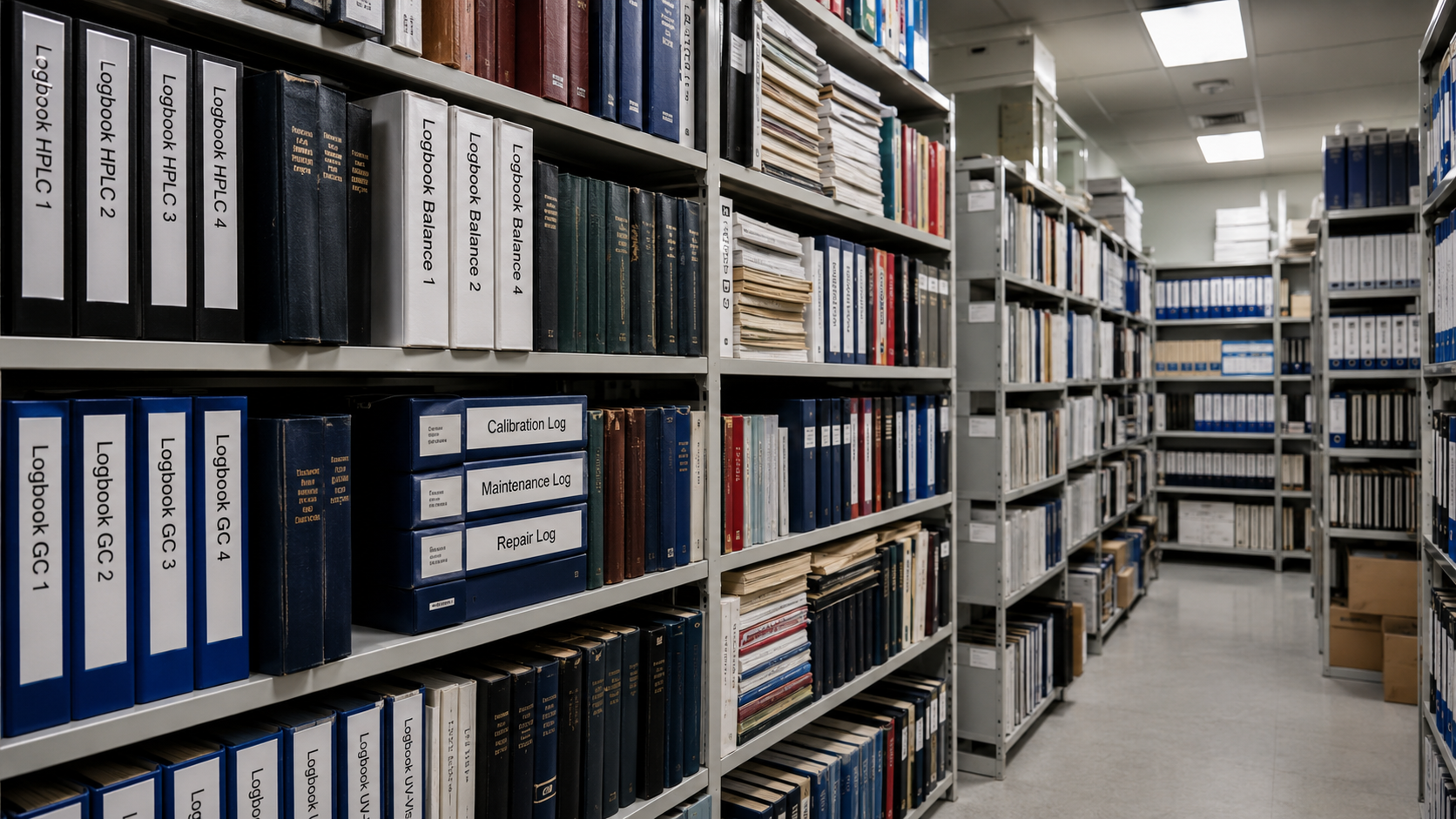
Limitations of Excel, lists and individual tools
Many laboratories start by monitoring test equipment using Excel spreadsheets or simple tables. Even free test equipment monitoring software or standalone solutions seem sufficient at first glance. However, in practice, structural limitations quickly become apparent:
- missing link between maintenance and calibration
- no consistent test equipment management
- high manual maintenance effort
- Limited transparency regarding device status
- limited auditability
Free test equipment monitoring software can be useful for very small environments, but it hardly scales with increasing numbers of devices, staff turnover, or regulatory requirements. Professional test equipment management software and test equipment administration software therefore rely on integrated models that cover maintenance, calibration, and measurement equipment management together.
Conclusion
Today, a maintenance planner is far more than just an organizational tool. It is a strategic component of modern laboratory management and closely linked to test equipment management, measuring instrument monitoring, and calibration. In particular, the combination of a maintenance planner and a structured calibration calendar creates transparency, safety, and efficiency.
In an increasingly digitalized laboratory environment, simple lists and individual tools are no longer sufficient. Laboratories that want to ensure quality, compliance, and cost-effectiveness in the long term cannot avoid integrated solutions. A maintenance planner – embedded in a holistic laboratory management system – is therefore no longer an optional extra, but an indispensable foundation for professional laboratory work.
Frequently Asked Questions About Maintenance Planners in Laboratory Management
What is a laboratory maintenance planner?
A maintenance planner is a structured system for scheduling, executing, and documenting maintenance tasks for laboratory equipment. It tracks maintenance intervals, responsibilities, equipment status, and history, and is typically part of a laboratory management or equipment management solution.
Why is a maintenance planner indispensable in the laboratory today?
Modern laboratories rely on complex, high-cost systems and must adhere to strict quality and regulatory standards. A maintenance planner ensures that equipment remains functional, compliant, and audit-ready at all times. Without structured maintenance planning, the risks of downtime, rising costs, and compliance gaps increase significantly.
How does a maintenance planner differ from basic test equipment monitoring?
Basic test equipment monitoring—such as using Excel or isolated tools—usually only tracks calibration dates. A maintenance planner also accounts for technical maintenance, equipment status, lockouts, history, and responsibilities, integrating this information into your operational processes.
What role does DIN EN ISO/IEC 17025 play in maintenance management?
DIN EN ISO/IEC 17025 requires systematic test equipment monitoring, documented maintenance, regular calibration, and full traceability. A maintenance planner supports the implementation of these requirements in a structured and audit-proof manner.
Isn't Excel sufficient for monitoring test equipment?
Excel-based calibration management may work for very small labs in the short term. However, as the number of devices grows, staff changes occur, or audit pressure increases, Excel quickly reaches its limits: lack of transparency, high manual effort, and low reliability.
Is there free test equipment monitoring software as an alternative?
Free test equipment monitoring software can be a good starting point, especially for very small labs or those with a limited number of devices. In practice, however, such solutions often only cover partial aspects. Maintenance, calibration, device status, responsibilities, and audit-ready documentation are usually not fully integrated, which leads to increased manual effort and limited transparency as complexity grows.
At the same time, there are now modern SaaS-based laboratory management solutions like LabThunder that require no internal IT operations and follow a usage-based pricing model. By billing based on the number of user accounts actually required, maintenance, test equipment, and calibration processes can be managed in a structured and compliant manner, even with a limited budget. This creates a commercially viable alternative between free standalone solutions and classic, high-cost enterprise systems.