Preventive vs. Predictive Maintenance in the Laboratory – Why It Is Time to Rethink Maintenance
.avif)
"The device was just undergoing maintenance – and now this!"
A phrase many lab managers and equipment operators know all too well. Despite adherence to maintenance schedules and a complete service record, an analytical instrument suddenly fails. The result: downtime, postponed analyses, stressed teams – and in the worst case, jeopardized results.
What's going wrong here? The answer often lies in the maintenance concept itself. Many laboratories still rely on purely preventative maintenance – time-based intervals, regardless of the actual condition of the systems. Yet, data-driven approaches that reduce downtime, save costs, and use resources more efficiently have long existed: predictive maintenance.
What is preventive maintenance – and where does it reach its limits?
Preventive maintenance is widespread in laboratories: equipment is serviced regularly – for example, every six months or after a defined number of operating hours. The approach is simple, transparent, and has clear advantages:
- Standardized processes
- Scheduled maintenance appointments
- Compliance with regulatory requirements
However, in practice, it turns out that time-based maintenance does not always protect against failures.
Because it ignores the actual condition of the device. Some components last longer, others wear out faster – for example, due to intensive use, frequent temperature changes, or unsuitable samples. The result:
- Unnecessary maintenance, where functioning parts are replaced.
- Unplanned downtime between maintenance cycles
- High resource expenditure that ties up the maintenance department.
This is a noticeable problem, especially in research and analysis-heavy laboratories where systems are used differently.
Was ist Predictive Maintenance?
Predictive maintenance goes a step further: Instead of following a fixed schedule, maintenance is performed when needed – based on data and the actual condition of the system.
The goal:
- Detect failures early
- Optimally time maintenance
- Replace parts before they become critical – but not too early.
This isn't about equipping every screw with sensors or developing complex algorithms. Rather, it's a principle: intelligent maintenance, supported by existing data sources.
Predictive = Sensors? A widespread misconception
Many people associate predictive maintenance with IoT, machine learning, and expensive sensors. But that's only a small part of the story.
Especially in laboratory environments, numerous valuable data sources already exist – and can be used without additional sensors. The crucial factor is making these data sources visible, analyzable, and linkable. This is precisely where digital maintenance comes in.
Underestimated data sources in the laboratory
Digital maintenance means collecting maintenance and system data centrally, in a structured and analyzable way – often using existing tools that are already available.
Typical, valuable data sources in the laboratory:
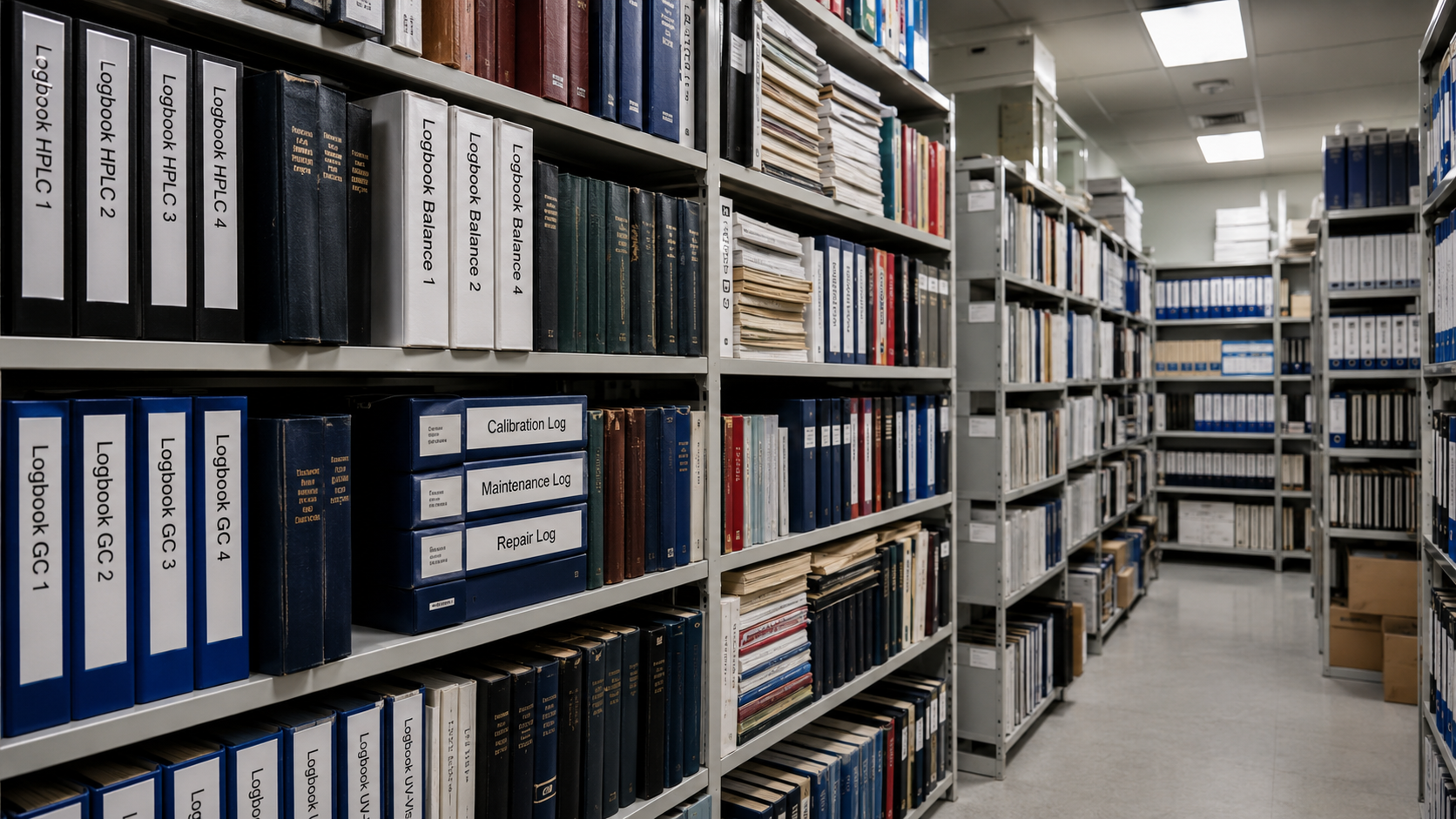
- Digital logbooks: Frequently used systems provide entries about malfunctions, warnings, or manual interventions.
- Booking systems: Show the actual usage of individual devices.
- Maintenance logs: They reveal trends – such as recurring errors or unusually high usage of certain components.
- Control chart: Especially indispensable in analytical laboratories – it shows drift, deviations and quality changes over time.
All this information – when combined and correctly interpreted – can provide early warning signs of unusual behavior: a system that is booked more often but used for shorter periods? A drift in the quality control chart indicating contamination? A frequently recurring error despite recent maintenance?
This creates real predictive maintenance potential – entirely without additional hardware.
The next step: Using data effectively
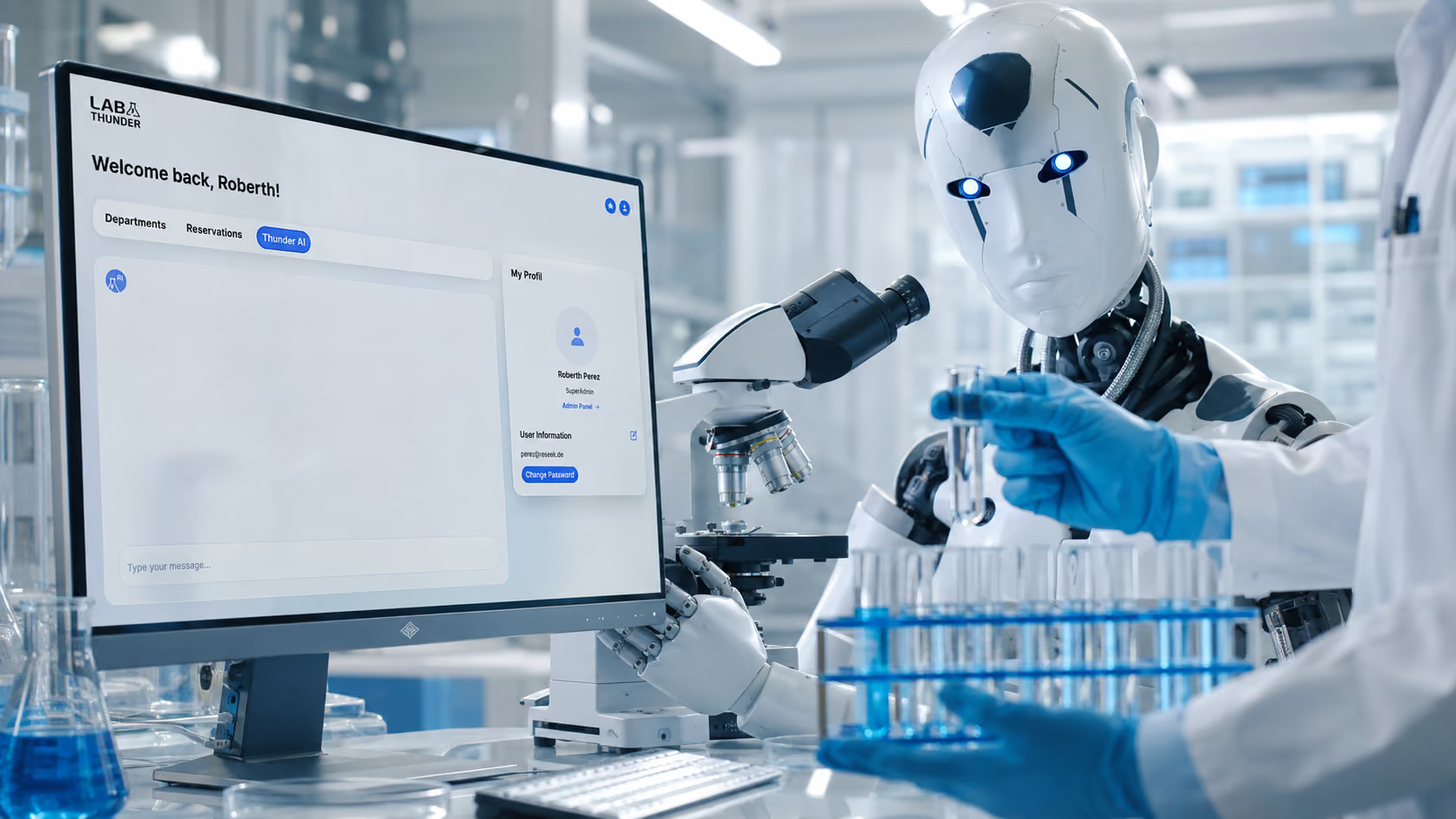
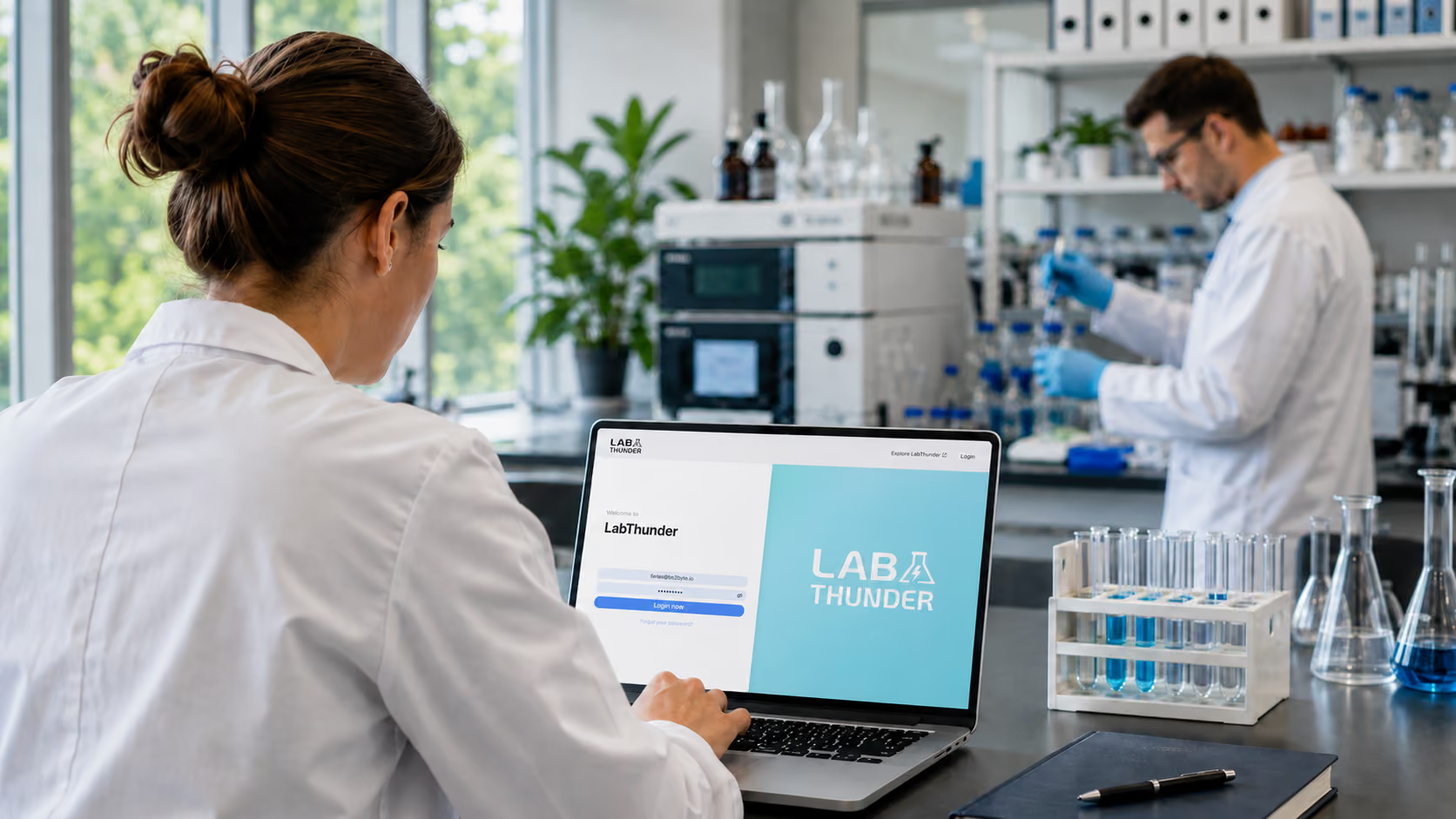
The key lies in the systematic consolidation of this information. This is precisely where modern laboratory software like LabThunder comes in.
Without sounding like an advertisement, one can say:
LabThunder helps laboratories to combine existing data sources and make data-driven maintenance decisions.
What this means in concrete terms:
- Digital logbooks instead of paper
- Usage data from the booking system in conjunction with service logs
- Automatic alerts for deviations in the quality control chart
- Clear dashboards that alert decision-makers to potential problems at an early stage.
- Export functions and GMP-compliant documentation to meet regulatory requirements.
This is how a maintenance backlog becomes a maintenance strategy – step by step towards digital maintenance.
Conclusion: Those who rethink their approach win.
Traditional preventive maintenance still has its place – but it is no longer sufficient to run modern laboratories efficiently, reliably and economically.
Predictive maintenance makes it possible to use existing data for maintenance purposes – without large investments, but with clear added value.
Those who have the courage to question their own processes and cleverly combine existing tools will be rewarded:
- Fewer breakdowns
- Lower maintenance requirements
- More time for research and analysis
🔎 Would you like to know how you can get started?
In our free whitepaper, we show in a practical way how laboratories can implement predictive maintenance using their own resources – including examples, tips and tools.
FAQ – Frequently Asked Questions About Digital Maintenance in the Laboratory
Is predictive maintenance possible without sensors?
Yes. Many laboratories already have valuable data sources – such as digital logbooks, booking systems, or the control chart. With the right software, this data can be used for digital maintenance .
What role do digital logbooks and control charts play in digital maintenance?
They are often the first indicators of system problems. While logbooks document malfunctions, the control chart reveals gradual changes and drift – providing valuable insights for predictive maintenance.
How do I get started if I have only performed preventive maintenance so far?
Start with an assessment: Which data sources are available? Where are logbooks kept, and which systems are particularly prone to failure? A first step is the digitization of this information – for example, using software like LabThunder.
Can predictive maintenance be used in a regulated environment (GMP/ISO)?
Absolutely. Digital maintenance is traceable, documentable, and audit-ready – provided the software used meets the requirements. LabThunder, for example, is designed for use in GMP environments.
What Requirements Must Be Met to Digitalize a Laboratory?
Often less than you might think: a stable network, a willingness to change processes, and software that is intuitive, modular, and easy to integrate. The transformation begins with the right mindset and one small step.