
Introducing New Analytical Techniques: How to Succeed Without Wasting Time or Money
.jpg)
Introducing new analysis techniques: How to achieve this without wasting time and money
Are you planning to introduce a new analytical technique into your laboratory, or have you already done so? Whether it's LCMS, GCMS, or other complex technologies, implementing such systems can be an exciting challenge. At the same time, it often presents unfamiliar tasks for daily laboratory work, especially for less experienced staff. This article provides helpful tips and tricks to ensure you can seamlessly integrate your investment into your daily laboratory routine and immediately generate added value.
Step 1: Good preparation is key.
Even if it means extra effort and can temporarily disrupt the normal workflow, well-planned preparation always pays off in the end! There are some important points you should consider to avoid potential problems from the outset.
Make the right choice
If you haven't yet decided on a manufacturer or model, it's wise to proceed carefully. Don't be swayed by quick deals. A well-considered decision is particularly important because a laboratory system like an LCMS will typically be with you for 10-15 years or more. During this time, manufacturer support becomes a crucial factor. So, choose not just a device, but also a partner you can rely on in the long term.
Technical preparation
If you have already ordered the device or are about to, be sure to check that all technical requirements are met. Here are some questions you should clarify:
- Are the exhaust air and air conditioning systems sufficient?
- Can the ground support the weight of the system?
- Do you have enough space, and will everything fit through doorways or into elevators?
Close collaboration with the manufacturer helps to identify and resolve potential problems early on. Making changes later can be expensive and time-consuming – avoid this through thorough planning.
Step 2: Training and employee education
Implementing a new laboratory system is not only a technical challenge, but also a human one. Your team must be able to operate the system safely and efficiently. Reputable providers will support you with comprehensive training. However, it's important to keep a few details in mind.
[[image-1]]
Type and scope of training
Clarify the exact procedure of the training beforehand:
- How many employees can participate?
- How many days does the training last?
- Is practical hands-on training on the equipment planned?
Hands-on training sessions, where your employees work directly on the system, usually impart significantly more knowledge than presentations or online training alone. Invest in a training format that is optimally tailored to your needs.
Key users vs. the entire team
For complex laboratory systems, it can be beneficial to use the so-called "pyramid model." This involves intensive training for one or two employees (key users), who then pass on their knowledge to the team. This method has clear advantages:
- Efficient:The trainer can concentrate on a few people and address individual questions more specifically.
- In the long term:Key users develop in-depth knowledge and act as internal contacts.
- Cost-saving:Fewer participants mean lower training costs.
However, there are also disadvantages:
- Dependency:When a key user is unavailable, valuable knowledge is lost.
- Burden:Key users bear the dual responsibility of being both users and trainers.
- Slow knowledge transfer:It takes longer for the entire team to build up the necessary know-how.
We have now learned about the advantages, but also the disadvantages. The disadvantages are not insignificant, as they leave a residual risk that we cannot control – such as the departure or illness of a key user.
Practical tips for implementation
- Select motivated and eager-to-learn key users.
- Support them through regular training.
- Document processes to ensure knowledge is preserved permanently.
In the next section, we will show you how you can eliminate the disadvantages of the key user method.
Step 3: But how do we obtain the knowledge about the equipment?
Your new investment is installed, and your team is trained. Nevertheless, it often happens that operations don't run as smoothly as hoped. Especially at the beginning, many laboratories require intensive support from the manufacturer. Even more serious are long-term challenges, such as the loss of expertise due to the absence or departure of trained staff. Such situations can not only lead to decreased productivity but also significantly increase costs.
Solution: Knowledge Management
Structured knowledge management helps minimize these risks. By centrally capturing and making accessible all relevant information, you create a solid foundation that ensures your laboratory remains stable even in crisis situations. Document workflows, maintenance plans, and best practices to embed knowledge throughout the entire team.
LabThunder: The smart solution for modern laboratory management
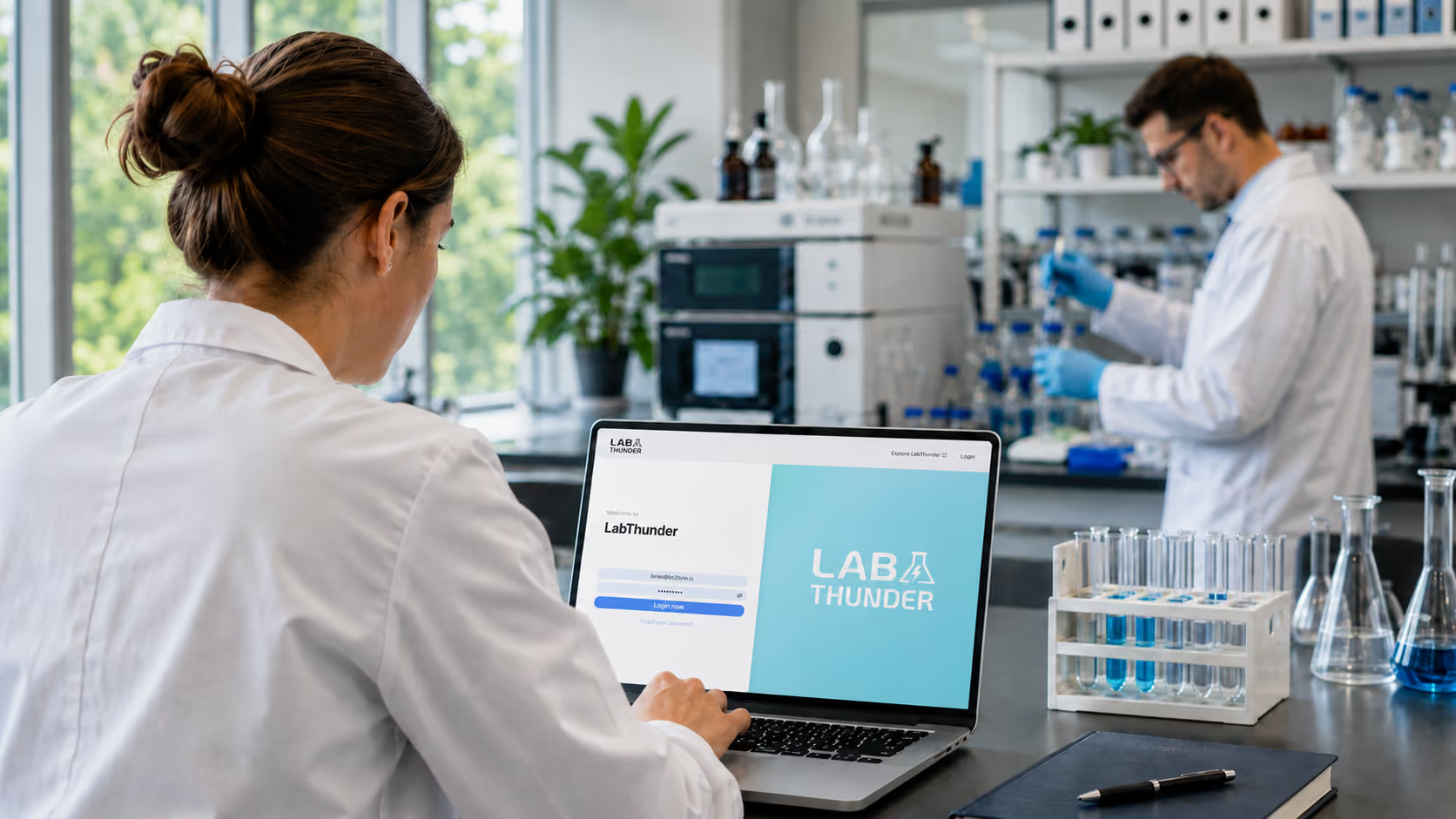
Here it beginsLabThunderLabThunder is an innovative software solution specifically designed for laboratories. With LabThunder you can:
- Store knowledge centrally and access it at any time
- Digitize and automate processes
- Support your team with an AI-powered assistant
LabThunder helps you overcome challenges and efficiently integrate your investment into your daily lab routine. Turn risks into opportunities and future-proof your lab!

.avif)