
Modern Laboratory Management: When the Experts Leave – Why Knowledge Retention Is Now a Management Priority
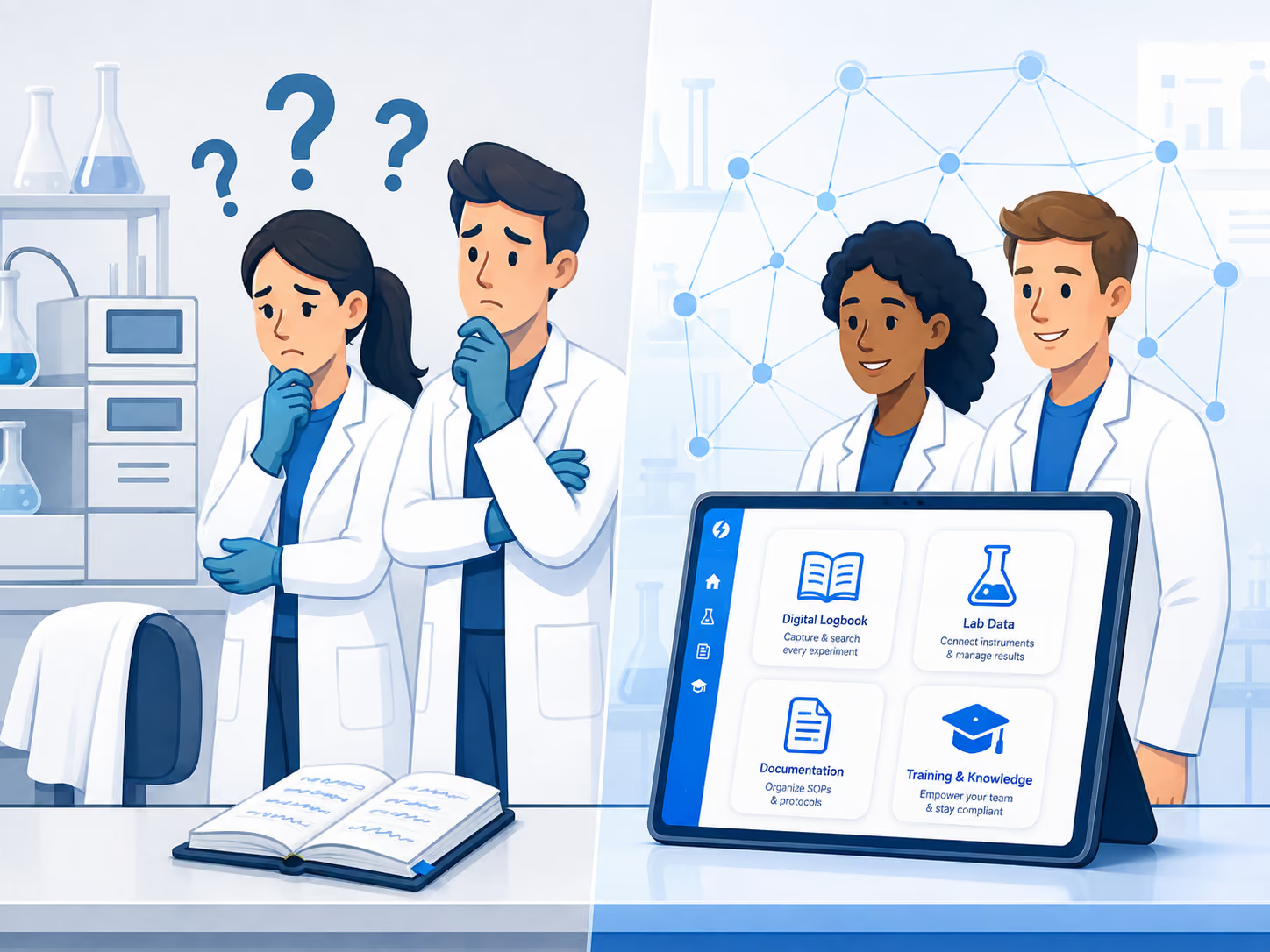
The daily routine of many laboratories...
Do you know that feeling? Every lab has that one person. You know who I mean: the colleague who knows exactly why the LC-MS sometimes acts up. The colleague who can find the hidden menu settings in their sleep. The person you call when absolutely nothing else works.
As long as these experts (we call them key users) are there, the business runs smoothly. But what happens when they leave?
Reality hits hard
The job market is tight – we all know that. Experienced colleagues are retiring, and young talent is drawn to industry or pharmaceuticals. At the same time, our methods are becoming increasingly complex: LC-MS, automated workflows, LIMS, ELN, and so on.
The result? New employees take forever to become fully up to speed. Teams become dependent on individual key users. And if a rare error occurs, everything suddenly grinds to a halt.
Knowledge retention is no longer a luxury. It is a central building block for stable laboratory management.
Two real-life stories
Story 1: The LC-MS Adventure
A small medical laboratory (ISO 15189 accredited) acquired a new LC-MS. The goal was to introduce a new analytical method that would generate significant revenue. A return on investment (ROI) was expected within 12 months. The calculation is simple: increased in-house workload, faster results, and billing through health insurance companies equals a faster return on investment.
So much for the theory.
In practice, training takes months instead of weeks. The lab is dependent on the equipment service. One employee becomes an expert – she knows every trick, every matrix trap, every clever rinsing strategy. But is it documented? Not a chance.
When she leaves the lab, a wealth of practical knowledge goes with her. The SOPs are there, sure. But they don't replace what's in her head. The search for a replacement begins. The training starts all over again. The risk increases. As do the service costs – since the new employee needs a considerable amount of time to master the system.
Story 2: Organic waste becomes fuel
An industrial company in a rural area has developed an innovative process: producing fuel from organic waste. A FAME analysis system is being set up for quality control. Sounds like modern laboratory management practice.
However, the location is in a rural area. Skilled workers? In short supply.
The company invests in equipment and training. After some time, everything runs smoothly – supported by a small team of people who have worked their way up through the ranks. But the practical knowledge gained from developing methods and troubleshooting? It remains in their heads.
If a key person is unavailable, a complete system reset is imminent. Everything starts from scratch. In rural areas, finding a replacement is difficult – with direct consequences for process reliability.
[[image-2]]
What does "securing knowledge" or knowledge management really mean?
Many people associate knowledge retention with properly filed SOPs and manuals. That's important, yes. But it's not enough.
In the laboratory, there are three levels of knowledge:
1. The obvious (explicit knowledge)SOPs, work instructions, method protocols, validation documents, maintenance plans. The stuff that's written down in black and white.
2. The Invisible (Implicit Knowledge)The experiential knowledge that is never written down:
- Why does the device sometimes display this strange error message?
- In what order should I best adapt the method?
- How do I handle the hardware so that it lasts longer?
- What tricks are there for dealing with difficult matrices?
3. The Forgotten (Knowledge from Deviations)CAPA documents, OOS assessments, system logs. Lessons learned from real problems – provided they are documented and accessible.
Most labs have level 1 under control. But the real bottlenecks lie in levels 2 and 3. Precisely where it is decided whether operations run smoothly or grind to a halt at the slightest problem.
The solution: Make knowledge available where it is needed.
Modern laboratory management means systematically capturing knowledge and making it available in a targeted manner. Not in some folder, but directly at the instrument, at the method, in the process.
What specific help is needed?
- A digital knowledge base, which is searchable by devices, methods, matrices and error patterns
- Clear rolesWho is responsible for the methodology? Who is the key user? Who is in charge of training?
- networked digital logbooks, in which malfunctions, maintenance work and lessons learned are documented – and, most importantly, can be found again.
- Structured onboarding conceptsNot just "going along," but a real plan with theory, practice, and documented competency approvals.
Importantly, lab management software alone won't solve the problem. The processes, roles, and culture of knowledge sharing must be right. Digital systems then help to make this structure usable in everyday practice.
Onboarding: from simply going along for the ride to a structured start
Honestly: What does the onboarding process look like in your lab? "Just watch and ask if there's anything"?
There's a better way. With a structured approach:
- Role-related competency profilesWhat should a new employee be able to do after 30, 60, 90 days?
- A real 30-60-90 day plan: with clear milestones and checks
- Digitale Troubleshooting-Guides: directly available if a problem occurs
- Measurable key performance indicatorsHow long does it take for someone to be able to work independently? What is the error rate in the first few months?
The better structured the knowledge base, the less the onboarding process depends on individuals. This makes the lab more robust – and relieves the burden on experienced colleagues.
How laboratory management software can specifically support
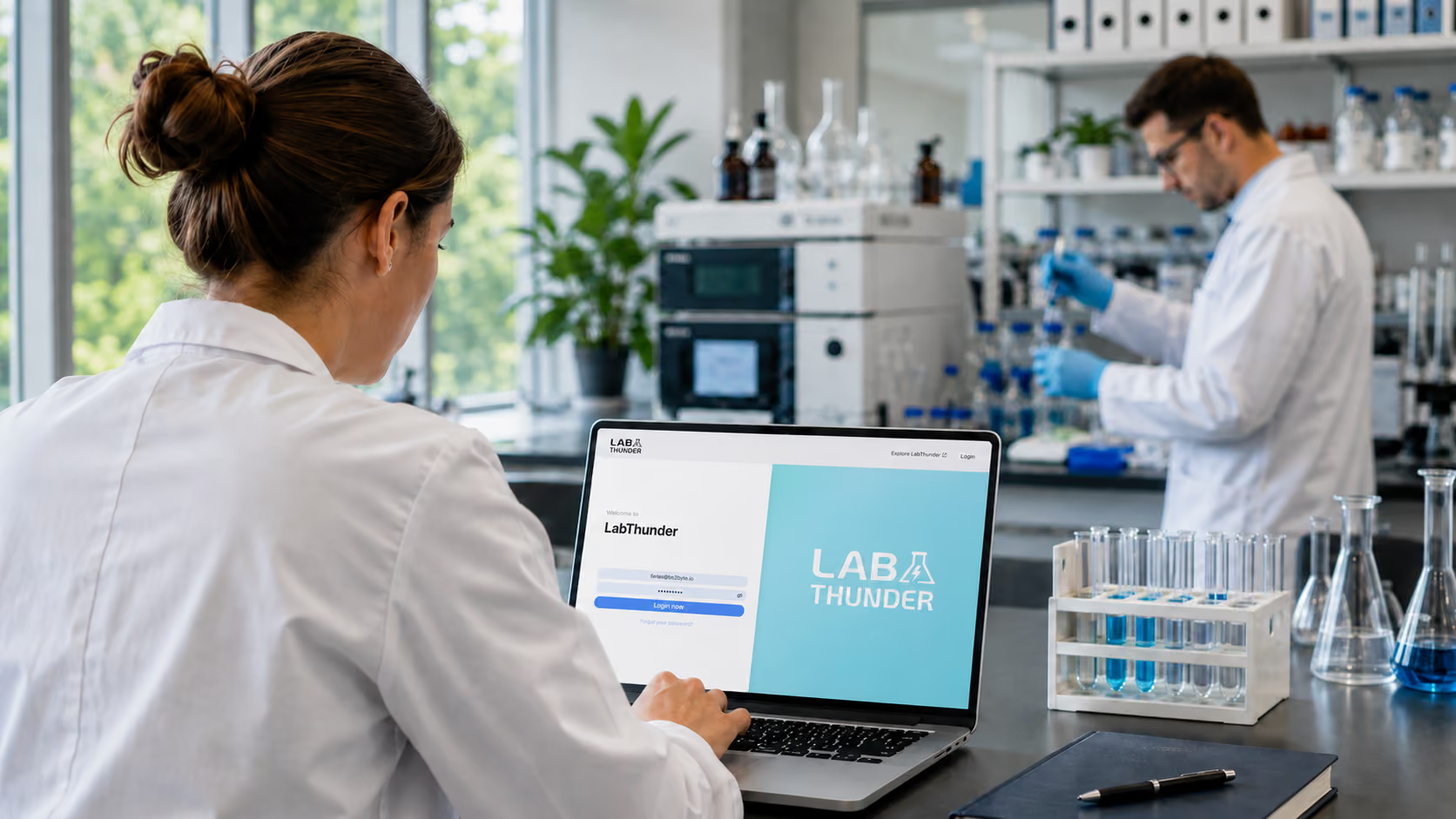
This is precisely where specialized laboratory management software comes into play. Solutions like LabThunder connect three key levels that normally exist separately:
1. EquipmentmanagementDevices, maintenance statuses, and master data are recorded in a structured manner. Nothing gets lost anymore because "my colleague did that back then."
2. Digital logbooksMalfunctions, maintenance, parameter changes, and observations are documented directly on the system. In real time. Not three days later in an Excel spreadsheet.
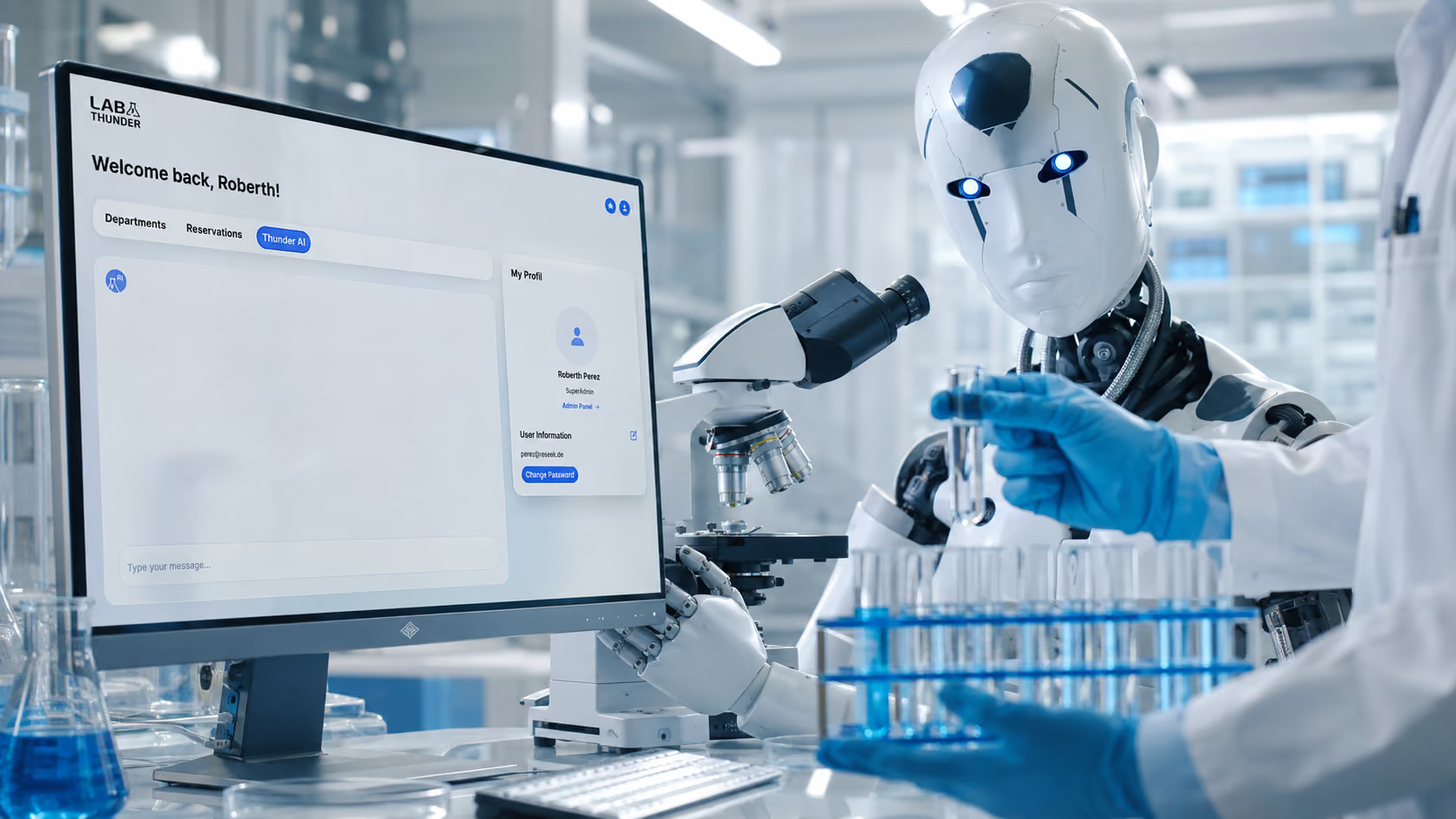
3. Knowledge Base & Thunder AITroubleshooting tips, lessons learned, and know-how from logbooks are now searchable. New employees can find answers without having to ask three different people.
What makes LabThunder special: The software is specifically designed to transform "know-how in the mind" into a living, searchable and auditable knowledge system – with direct reference to devices and methods.
What are the practical implications of this?
- Less dependence on individual experts
- Faster and safer onboarding of new colleagues
- A significantly more stable foundation for quality, compliance, and continuous improvement.
In short: This makes modern laboratory management not only more efficient, but also more robust.
Conclusion: Knowledge retention is an investment that pays off.
Knowledge loss isn't a dramatic explosion. It's a gradual process. A retirement here, a job change there. And at some point, someone asks themselves: "Why did we actually do it that way back then?"
The good news: There is a way out.
Investing in systematic knowledge management today will reduce downtime, service costs, and audit risks tomorrow. Focusing on structured onboarding and networked digital systems will make your lab less dependent on individual talent.
Specifically, this means:
- Shorter training periods
- Reduced productivity losses during staff turnover
- Greater assurance in quality and compliance
- Improved laboratory management overall
It's a matter for the boss. But it's worth it.
Frequently Asked Questions About Knowledge Retention in the Laboratory
What is knowledge preservation in laboratory management?
Knowledge preservation in the laboratory means systematically documenting employees' experiential knowledge and making it accessible to the entire team. This encompasses not only SOPs and manuals, but above all practical know-how: troubleshooting tips, typical error patterns, proven workarounds, and lessons learned from everyday operations.
Why are SOPs and work instructions insufficient for sustainable knowledge management?
SOPs describe the "what" and the "how," but rarely the "why" or the practical tricks learned through years of experience. If an experienced colleague knows why the LC-MS acts up with certain matrices or which rinsing strategy actually works, you won't find that in any SOP. It is precisely this implicit knowledge that is often lost when employees leave the lab.
How long does it typically take to onboard new employees in the laboratory?
This depends heavily on the complexity of the analysis. For simpler routine methods, it can take 3-6 months, while complex methods like LC-MS or specialized analyses often take 12-18 months to reach full independence. With structured knowledge management and good laboratory management software, this time can be significantly reduced.
What is the difference between explicit and implicit knowledge?
Explicit knowledge is documented: SOPs, method protocols, and validation records. Implicit knowledge resides in the minds of experienced employees: typical root causes of errors, proven settings, gentle handling of hardware, and sensible method adjustments. The latter is usually far more valuable—but also much harder to capture.
What role does laboratory management software play in knowledge retention?
Modern laboratory management software like LabThunder integrates device management, digital logbooks, and knowledge databases into a single system. This allows experiential knowledge to be captured and made available exactly where it is needed—at the device, the method, or the process level. This makes knowledge searchable, traceable, and quickly accessible for new team members.
How can I prevent knowledge loss in my laboratory?
Concrete steps:
(1) Define roles (method owners, key users),
(2) introduce digital logs to document issues and lessons learned,
(3) create structured onboarding plans,
(4) build a searchable knowledge base,
(5) establish regular knowledge transfer sessions.
And above all: get started before the experts leave.
What is the cost of lost knowledge?
The true costs are often hidden: longer onboarding periods (weeks to months of lost productivity), more frequent service calls (due to a lack of internal troubleshooting expertise), quality losses caused by avoidable errors, extended downtime during malfunctions, and in the worst-case scenario: audit findings or compliance risks. Replacing a single key person can easily cost five to six figures.
Is knowledge management important for small laboratories, too?
For small laboratories in particular, knowledge retention is critical. If a key person is absent in a three-person team, it can threaten the very existence of the lab. Small teams often have less redundancy and rely more heavily on individual experts. Modern laboratory management with systematic knowledge retention creates greater stability, even in small organizations.
Which software is best suited for knowledge management and knowledge retention in the laboratory?
In laboratory environments, knowledge management software should primarily meet three requirements: Structure, Findability and Contextual relevance. Solutions that only offer classic document management are often insufficient in practice, as they do not effectively map troubleshooting knowledge or equipment context.
Suitable systems typically possess the following features:
- Central knowledge base with versioning, approvals, and an audit trail
- Fast search by device, method, matrix, or error pattern
- Linkage to equipment, logbooks, and processes
- Integration of training, competency records, and onboarding elements
- Role and permission concept for regulated environments
- Simple capture of lessons learned and troubleshooting cases
In practice, systems that combine equipment management, digital logbooks and knowledge bases as suitable. They allow knowledge to be linked directly to equipment, methods, and malfunctions, making it accessible exactly where it is needed.
Note: Modern platforms like LabThunder are specifically designed for this synergy—they bring together knowledge, logbooks, and equipment status in a connected environment. This makes LabThunder an excellent choice for labs looking to preserve institutional knowledge and onboard new employees more quickly.


.avif)