
Why Laboratory Documentation Is More Complicated Than It Needs to Be Today
.avif)
Laboratory documentation is meant to create safety. It makes processes traceable, ensures quality, and facilitates audits. That's the theory.
In practice, the situation is different: In many laboratories, documentation now consumes so much time that it feels like a second full-time job. Between logbooks, Excel spreadsheets, test equipment monitoring, calibration plans, and maintenance records, there is hardly any room left for what is essential – sound analysis and scientific work.
The problem isn't a lack of motivation. The problem is the system itself.
Laboratory documentation: Many isolated solutions, no overall picture
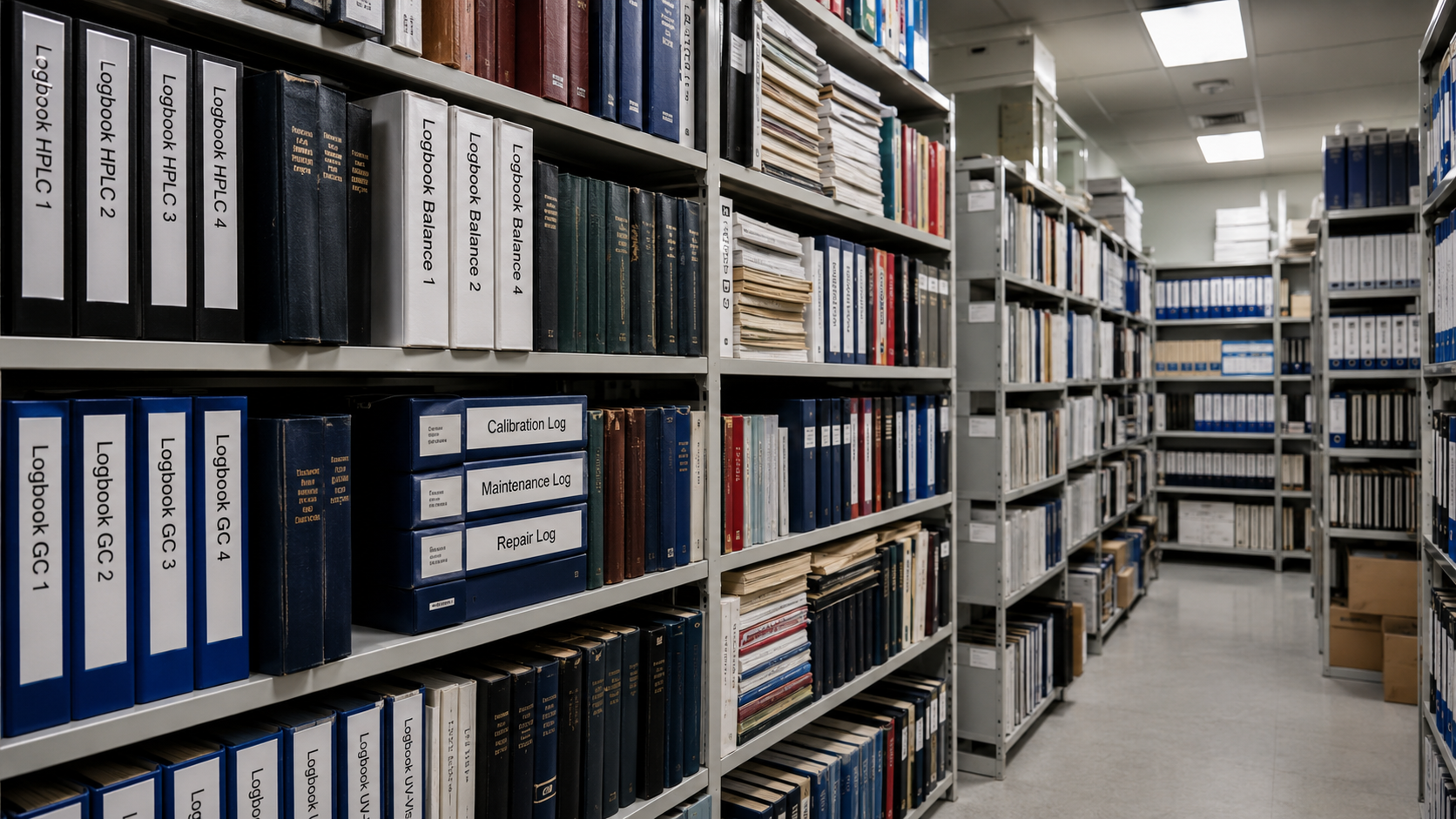
Over the years, parallel systems have grown in most laboratories:
- Paper logbooks for device usage
- Excel spreadsheets for test equipment monitoring
- Separate maintenance lists in various formats
- Calibration protocols in device folders
- QM documents on the network drive
- Manuals are everywhere - but never where you need them.
Each element has its purpose. But together they result in a fragmented quality management system in the laboratory – with noticeable consequences:
Typical problems in everyday documentation:
- Entries will be added later when time allows.
- The information is incomplete or contradictory.
- Data exists twice in different systems.
- Data entry errors from paper to Excel are becoming more frequent.
- Audits create stress because evidence has to be painstakingly gathered.
This doesn't happen due to negligence. It happens because the system is working against the natural workflow.
[[image-1]]
Paperless lab: Less friction, less clicks
Many associate digitalization with the fear: "Even more masks, even more mandatory fields, even more clicks."
A paperless laboratory should achieve precisely the opposite. When implemented correctly, digitalization means:
- Information is collected directly at the point of origin.
- The system automatically suggests recurring data.
- Devices, maintenance, calibration and use are linked
- Documentation runs in the background – without any extra effort
The goal is not more documentation. The goal is less friction combined with better quality assurance in the laboratory.
Test equipment monitoring: Where Excel reaches its limits
Test equipment monitoring is a critical point in many laboratories. It is often still organized via:
- Excel lists (Excel is standard for test equipment monitoring)
- Manual calendar reminders
- Handwritten checklists
- Email chains between colleagues
These methods work – until they stop working.
Typical risks associated with manual monitoring of test equipment:
- Calibration appointments are being missed
- Responsibilities are unclear or outdated
- The status of individual devices is not transparent.
- Audits lack complete documentation.
- Blocked devices are still being used
This is precisely where comprehensive quality assurance in the laboratory is crucial. An overlooked or expired testing instrument can not only call individual measurements into question – in the worst case, it can jeopardize entire batches or approvals.
Test equipment monitoring and calibration: These must come together.
Calibration monitoring of test equipment is not an isolated process. It is directly related to the use of the equipment:
- When was the device last used?
- Is the calibration still valid?
- Who is responsible for the implementation?
- What evidence already exists?
When this information is scattered, gaps arise. And gaps mean risk.
Usability determines data quality
A system can be technically perfect – if it feels complicated, it will be avoided in everyday use.
Then the following occur:
- Additions at the end of the week
- Abbreviations that are "actually forbidden"
- Entries marked "We'll do it later"
- Excel shadow lists alongside the official system
Therefore, good quality management in a laboratory requires above all:user-friendliness.
Software must be designed so that it:
- understands the actual workflow
- logically structured
- automatically supported instead of blocking
- faster than the Excel alternative
Only then will documentation become part of the routine – instead of a bothersome additional effort.
How modern laboratory systems simplify documentation
Modern software for the paperless laboratory connects all relevant areas:
- Devices and their master data
- Maintenance and calibration history
- Logbooks containing usage data
- Test equipment monitoring with automatic reminders
- Auditable reports at the touch of a button
Practical examples from everyday laboratory life:
- A device is being used → Usage is automatically documented
- A calibration appointment is approaching → The system reminds the person responsible.
- A testing device is blocked → Its use is no longer technically possible.
- An audit is pending → All evidence is digital and fully accessible.
This way, documentation isn't "processed" retrospectively. It happens during normal work – in the background, without additional effort.
Why this issue is becoming more urgent
Laboratories today operate under different conditions than they did ten years ago:
- Regulatory requirements are constantly increasing.
- Audits are becoming more detailed and more frequent.
- Documentation requirements are increasing
- At the same time, staffing levels often remain the same.
More manual documentation is not a solution under these conditions. It exacerbates the problem.
The answer lies in:
- Integration instead of isolated solutions– one system instead of ten lists
- Automation instead of change orders– Documentation in the process
- Clear responsibilities– who does what by when
- Software that supports people– not burdened
Conclusion: Rethinking documentation
The problem is not the documentation itself. The problem is how it is often organized today.
When test equipment monitoring, calibration, maintenance and use come together – in one system that is easy to use – perceptions change fundamentally.
Documentation then no longer feels like control. It becomes what it should be:Safety and relief.
weit die Theorie.
In der Praxis sieht es anders aus: In vielen Laboren frisst die Dokumentation inzwischen so viel Zeit, dass sie sich wie ein zweiter Vollzeitjob anfühlt. Zwischen Logbüchern, Excel-Listen, Prüfmittelüberwachung, Kalibrierplänen und Wartungsprotokollen bleibt kaum noch Raum für das Wesentliche – saubere Analytik und wissenschaftliche Arbeit.
Das Problem liegt nicht an fehlender Motivation. Das Problem ist das System selbst.
.avif)