
Starting Your Own Laboratory: 10 Essential Points You Need to Consider
.avif)
Are you a chemist looking to become self-employed and open your own laboratory? Deciding to establish your own lab is a significant step that requires careful planning and strategic thinking. Especially in the laboratory sector, inadequate planning can quickly lead to substantial costs. With our 10 expert tips, we'll help you avoid common mistakes and develop a sustainable and profitable business model. This guide will provide you with essential strategies and practical advice for successfully establishing your lab. We also examine the 2 biggest cost traps in the area of laboratory equipment and organization.
Step 1: Clarify qualifications and necessary certifications
Before opening your own laboratory, it is essential to carefully examine your professional qualifications and the legal requirements for certification. Each country, and often each region, has specific regulations regarding who is authorized to operate a laboratory, particularly when it comes to medical or pharmaceutical laboratories.
- Verification of professional qualifications: Make sure you have the necessary academic and professional qualifications to manage a laboratory. This could be a degree in chemistry, biology, or a related field, supplemented by specialized training and practical experience.
- Inquire about certifications: Check with the relevant authorities or professional associations regarding the required certifications. For example, medical laboratories often require additional approvals to ensure that the laboratory and its operators meet safety and quality standards.
- Seek legal advice: It can be very helpful to consult a lawyer who specializes in healthcare or the specific regulatory requirements in your field. These professionals can offer valuable insights and ensure you navigate all legal hurdles correctly.
- Continuous professional development: The laboratory market and scientific standards are constantly evolving. Plan regular professional development and training to stay up-to-date with the latest technologies and scientific findings.
Profitipp: In addition to attending trade fairs like Analytica or Achema, it's also a good idea to participate in specific trade fairs and events in your field. Check the websites of hardware manufacturers as well. They often offer free or inexpensive events focusing on specific analytical topics – always a great opportunity to network!
Practical example: Who is allowed to operate a medical laboratory?
Operating a medical laboratory requires not only professional expertise but also adherence to strict regulatory standards. To be authorized to operate a medical laboratory, the operator must possess certain qualifications and be able to demonstrate relevant certifications.
Qualifications: In most countries, managing a medical laboratory requires a university degree in a relevant field such as medicine, pharmacy, biology, or chemistry. In addition, specialized training in laboratory medicine is often required, such as a master's degree or a doctorate in clinical chemistry or microbiology.
Certifications: Certification according to internationally recognized standards is crucial, as it guarantees the quality and safety of laboratory processes. ISO standards are particularly relevant here.
- ISO 15189: This standard, specifically developed for medical laboratories, defines requirements for quality and competence. Certification according to ISO 15189 is often a prerequisite for operating a medical laboratory and is recognized by accreditation bodies worldwide.
- ISO 17025: This standard is relevant for laboratories that perform calibrations and tests, ensuring that these laboratories are technically competent and capable of producing valid results. For medical laboratories, this standard is generally not mandatory.
- IVD Directive (IVDR): The EU In Vitro Diagnostic Medical Devices Regulation (IVDR) governs the authorization and monitoring of in vitro diagnostic medical devices within the European Union. It sets strict requirements for the quality assurance and performance evaluation of these products. Laboratories that develop or use diagnostic tests must ensure that their procedures and products comply with the IVDR to guarantee a high level of patient safety and the reliability of test results.
In practice, this means: A medical laboratory in Germany that offers clinical tests for diagnostic purposes must be approved by the relevant state authority. The laboratory management must generally be a person with specific medical qualifications, such as a specialist in laboratory medicine. This person is responsible for compliance with all legal and regulatory requirements, including conducting internal and external quality controls in accordance with ISO standards. These steps ensure that medical laboratories not only provide high-quality and reliable diagnostic services but also guarantee patient safety and data protection.
[[image-1]]
Step 2: Market research and target group analysis
Before you begin setting up your laboratory, it is essential to thoroughly understand and analyze the market. This will not only help you better tailor your services to your customers' needs, but also differentiate yourself from your competitors.
- Market analysis: Begin with a comprehensive market analysis to identify trends, growth opportunities, and potential challenges. Examine existing demand in your field and evaluate your competitors' offerings.
- Target group definition: Define who your primary target group is. Is it medical facilities, pharmaceutical companies, research institutes, or perhaps private individuals? Understand the specific needs of these groups and how your laboratory can meet them.
- Competitive analysis: Take a close look at your competitors. What do they offer? Where are they successful, and where might they be leaving gaps that you could fill?
- Pricing strategy: Develop a pricing strategy based on your understanding of market dynamics and your cost structure. Consider how much your target customers are willing to pay and what your competitors are charging.
Profitipp: Utilize digital market research tools and resources, such as Google Analytics, industry reports, and social media, to gain deeper insights into your target audience and tailor your strategies accordingly. Additionally, attending industry events is worthwhile to get a feel for the market players and expand your professional network. These events often provide not only valuable market information but also opportunities to connect with industry leaders and potential customers. Remember, invest the time in thorough market research. In the end, the effort will pay off and minimize unnecessary risks.
Further resources: If you would like to learn more about the German laboratory market, I recommend two comprehensive studies on "Industry Analysis of Laboratory Analytics" by the Hans Böckler Foundation. These studies offer detailed insights and up-to-date data that can help you further refine your market strategy. You can find the studies at the following links:Link to the first study and Link to the second study.
Step 3: Define product and service offerings
A successful laboratory needs a clearly defined range of services. Before opening your laboratory, you should clearly define which services or products you want to offer and how you can differentiate yourself from the competition. A well-thought-out offering is key to targeting customers effectively and achieving long-term economic success.
- Define the range of services: What type of laboratory do you want to operate? Is it a medical diagnostic laboratory, a chemical or analytical testing laboratory, a forensic laboratory, or a specialized research facility? Define the specific analytical procedures and services you intend to offer.
- Develop specialization and unique selling propositions (USPs): In a highly competitive market, it's important to position yourself clearly. Consider whether you can specialize in specific analyses or technologies to serve a niche with less competition.
- Understanding target customers and their needs: Who are your main customers? Pharmaceutical companies, food manufacturers, research institutions, or medical practices? Tailor your offerings specifically to their requirements.
- Technology and method selection: Depending on the laboratory area, you need to decide which technologies and processes you want to work with. This involves not only the acquisition costs, but also long-term operating costs and maintenance requirements.
- Pricing and billing: Calculate your prices realistically by taking both fixed and variable costs into account. Ensure that your services remain competitive but also profitable.
Profitipp: Keep in mind that the laboratory industry is highly competitive, especially with large laboratory chains. Differentiate yourself from these providers! Larger chains often focus on automated mass processing of samples, which frequently leads to shortcomings in specific consultation and interpretation of results. Use this to your advantage: Focus on outstanding quality and exceptional customer service to differentiate yourself from these laboratories.
Practical example: "Successful for decades despite powerful competition"
Despite increasing competition from large laboratory chains in the environmental testing sector, there are still many highly successful small, regional laboratories that distinguish themselves from their much larger competitors through excellent service and the performance of specialized analyses. I have had the opportunity to work with laboratories that have successfully occupied analytical niches for decades and have established themselves in the market with highly specialized services. Their success demonstrates that customers often look not only for the cheapest provider, but also for expertise, personalized service, and precise analyses.
Step 4: Finding the right premises for your laboratory
The location and equipment of your laboratory are crucial for its long-term success and cost structure. A laboratory has specific requirements for its premises, which must take into account both legal and operational factors.
- Size and layout: The area must offer sufficient space for workstations, storage areas, offices, and technical equipment. Also consider separate areas for different tasks to prevent cross-contamination. Tip: At this stage, you should already be planning your future equipment needs to accurately estimate the space requirements. Manufacturers can usually provide you with the relevant installation requirements, including all the important specifications.
- Technical requirements: Check the existing infrastructure: Are there sufficient water, gas, and electricity connections? What ventilation systems are needed? Are there any special fire protection requirements? Again, it's important to coordinate with your equipment manufacturers early on to prevent unplanned additional costs later.
- Load-bearing capacity of the ceilings: Analytical systems such as mass spectrometers, diagnostic systems, or specialized testing machines can weigh several hundred kilograms. The load-bearing capacity of the building structure must be sufficient to safely install this equipment. This is a particularly critical point for laboratories located on upper floors.
- Location selection: Depending on the type of laboratory, proximity to clinics, medical practices, companies, research institutions, or industrial parks can be advantageous. Logistical accessibility for suppliers and customers also plays a role.
- Official permits: Depending on the location and type of laboratory, certain permits may be required. Check early on whether your planned activities comply with local building and environmental regulations.
- Expandability and flexibility: Your laboratory should not only meet current needs but also offer room for future growth. If scaling is planned, lease agreements and building structures should allow for this possibility.
Profitipp: The choice of premises can prove to behidden cost trap you'll find that you're on the safe side if you move into a building specifically designed for research and laboratories. Subsequent modifications, particularly regarding ventilation, gas supply, or safety systems for handling explosives, can be ruinously expensive and significantly impact your cash flow. Ventilation and air conditioning systems are especially crucial for mass spectrometers and other sensitive laboratory equipment. Plan for these requirements early on to avoid costly retrofits.
Practical example: "Ceiling load underestimated"
A laboratory in a venerable old building planned to purchase a Q-TOF system. Only after the purchase did it become apparent that the ceiling's load-bearing capacity was insufficient. Since the system was already en route, the laboratory had no choice but to undertake costly structural modifications. This was a mistake that could have been avoided with an early site assessment.
Practical example: "Laboratory in old premises"
Several years ago, a laboratory wanted to conduct cannabis research in an old university building. When the THC standards were ordered, the authorities pointed out that a specially secured cabinet for narcotics was required. However, due to the building's structural limitations, installing such a cabinet was impossible. As a result, THC analysis could not be carried out in that building. While this was very frustrating for the university, such an error would have had disastrous financial consequences for a private company.
Step 5: Choosing the right suppliers
Choosing the right suppliers is a crucial factor for the smooth operation of your laboratory. Whether chemicals, consumables, or high-precision analytical instruments – quality, reliability, and service are essential to avoid operational disruptions and delays.
- Reliability and delivery times: Choose suppliers who guarantee fast and reliable delivery. Especially in a laboratory environment, shortages of reagents or consumables can disrupt the entire workflow.
- Quality assurance: Check whether the suppliers' products are certified (e.g., ISO standards, GMP or GLP standards). The quality of the materials used directly impacts the reliability of your analyses.
- Price-performance ratio: The cheapest provider isn't always the best choice. Pay attention to a balance between cost and quality, especially for devices that require regular maintenance and more intensive service support.
- Building long-term partnerships: A stable partnership with trusted suppliers can bring you benefits such as discounts, preferred delivery times, or better support.
- Alternative sources: To protect yourself against potential supply bottlenecks, you should always have at least one alternative supplier in reserve.
Profitipp: Especially at the beginning, the temptation is great to always choose the cheapest provider. When selecting a supplier, pay attention to specific criteria such as service, delivery times, and quality. While there are many suppliers of chemicals, the selection for equipment is more limited. If you are still unsure, use decision matrices. These help to objectively evaluate different suppliers based on weighted criteria. This allows you to clearly compare quality, price, and service and make an informed decision. Unsuitable equipment, like unsuitable premises, can lead to problems. Cost trap develop!
Practical example: "The cheapest wins"
A laboratory faced the decision of purchasing a state-of-the-art mass spectrometer. They opted for the cheapest supplier – a manufacturer that offered attractive prices but lacked an established service network in Germany. It quickly became apparent that this was a costly mistake: the instrument was technically sophisticated, its operation complex, and the learning curve for staff correspondingly steep. Without adequate training and support, the implementation took significantly longer than planned, severely disrupting laboratory operations. The situation worsened when the instrument began experiencing technical failures – customer support was difficult to reach, spare parts had to be ordered from abroad, and repairs dragged on for weeks. To this day, the laboratory suffers from recurring problems and extended downtime. The seemingly inexpensive purchase turned out to be one of the company's most expensive decisions. This example vividly illustrates that the long-term costs of an instrument depend not only on the purchase price – service quality, training, and prompt repairs are equally crucial for cost-effective operation.
[[image-2]]
Step 6: Selecting the right staff
Like most businesses, a laboratory's success hinges on its team. Choosing the right personnel is crucial, as expertise, experience, and teamwork significantly influence daily operations.
- Check professional qualifications: Different qualifications are required depending on the type of laboratory. While a medical diagnostic laboratory needs specialized medical technical assistants or laboratory physicians, an analytical testing laboratory may require chemists or laboratory technicians.
- Don't underestimate soft skills: In addition to technical expertise, teamwork, independent work, and a precise work ethic are crucial for laboratory operations. Especially in smaller laboratories, employees often have to cover several areas of responsibility.
- Further training opportunities are offered: Laboratory technology is developing rapidly. Regular training and professional development are essential to keep pace with new methods and equipment.
- Leadership and corporate culture: Good leadership fosters motivation, efficiency, and a pleasant working environment. Clear responsibilities and transparent communication are particularly important in safety-critical laboratory areas.
- Training and quality standards: Each laboratory has its own workflows, documentation requirements, and quality standards. A well-designed onboarding program ensures that new employees are quickly trained and that errors are avoided.
Profitipp: The job market for qualified laboratory staff is tight. Use your network to find skilled professionals and offer attractive benefits such as flexible working hours, professional development opportunities, or modern workplaces. Especially in specialized laboratories, a good team can make all the difference.
Practical example: "Satisfaction as a guarantee of success"
A small environmental laboratory in Saxony-Anhalt has been successfully established in the market for years. A key factor in its long-term success is the high level of employee satisfaction. The owner promotes a modern management culture based on trust and personal responsibility. In conversation, he emphasized that a certain degree of flexibility is crucial for the motivation and loyalty of his employees. He doesn't mind if employees occasionally attend to personal matters or briefly use their cell phones – as long as the quality of their work doesn't suffer. This trusting work environment fosters team identification with the company and mutual support. A particular advantage of this work climate becomes apparent in critical situations: Even during illness or vacation, employees are often willing to answer questions about specific systems or support colleagues at short notice. This high level of commitment doesn't stem from pressure, but from genuine loyalty to the company – clear evidence that employee satisfaction and company success are closely linked.
Step 7: Break down lab costs
Realistic cost planning is essential for the long-term success of a laboratory. Many founders underestimate ongoing lab costs or calculate too tightly, which can quickly lead to financial difficulties. A detailed cost breakdown helps avoid surprises and establish a solid financial foundation. By reducing lab costs, you ultimately have two options: either to offer lower prices or to generate a higher profit margin. Here is a list of costs to consider:
- Acquisition costs: This includes laboratory equipment, furniture, IT infrastructure, and all other necessary investments for getting started. High-quality equipment is expensive, but the cost can be spread out through leasing or financing models.
- Ongoing operating costs: In addition to rent, electricity, and water, consumables, equipment maintenance costs, and software licenses must also be factored in. The energy consumption of laboratory equipment can also play a significant role.
- Personnel costs: In many laboratories, labor costs represent the largest share of fixed costs. In addition to salaries, social security contributions, insurance, and, if applicable, training costs must also be taken into account.
- Regulatory costs and insurance: Laboratories are often subject to special legal requirements, which involve additional fees. These include official permits, certifications, and liability insurance for laboratory operations.
- Unforeseen expenses: Having a financial cushion for emergencies is essential. Otherwise, unplanned repairs, regulatory adjustments, or supply bottlenecks can quickly become a financial burden.
Profitipp: Many laboratory founders focus on the initial investment costs but forget the long-term operating costs. Plan ahead and calculate not only the investment costs, but also maintenance costs, consumables, and energy consumption over several years. Take automation seriously as well.
Practical example: Reducing personnel costs through laboratory automation
A government environmental laboratory faced a strategic decision: An experienced lab technician was retiring, but finding a replacement proved extremely difficult due to the shortage of skilled workers in the region. Instead of continuing the search for a suitable candidate, the laboratory – despite initial skepticism – opted for an alternative solution: The management invested in a fully automated sample preparation system for GC-MS analysis. After the successful implementation of this technology, it became clear that the system not only took over the tasks of the missing lab technician but also achieved significantly more precise dilution results. In the long term, the laboratory saved the equivalent of one full-time lab technician position and was simultaneously able to improve the quality of its analyses. This example demonstrates that targeted investments in automation can reduce long-term costs and, to a certain extent, alleviate staffing shortages.
Step 8: Form strategic partnerships
Building a successful laboratory requires not only expertise and equipment, but also strong partnerships. Through collaborations with other companies, research institutions, or service providers, laboratories can leverage synergies, reduce costs, and increase their competitiveness.
- Cooperations with research institutions: Universities and institutes are valuable partners for joint research projects, access to expert knowledge and possibly also for the use of specialized laboratory equipment.
- Networks with industry partners: Pharmaceutical companies, food manufacturers, and environmental laboratories often require specialized analyses or methods. Through strategic partnerships, your laboratory can position itself as a reliable partner.
- Collaboration with equipment and chemical suppliers: Some manufacturers offer not only products, but also training, technical support, and special conditions for long-term partnerships.
- Participation in trade associations and industry organizations: Membership in laboratory or industry associations can facilitate access to market trends, funding programs, and business contacts.
- Partnerships for logistics and sample handling: Depending on the type of analysis, it may be beneficial to collaborate with specialized logistics service providers or external samplers to increase quality and efficiency.
Profitipp: A good network can make all the difference in the laboratory industry. Establish contacts early and explore opportunities for collaboration – be it through joint projects, shared resources, or complementary services.
Practical example: Collaboration between industry and analytical laboratory
A small contract analysis laboratory has maintained a close, long-standing partnership with a mid-sized chemical company located nearby. This collaboration is based on mutual trust and offers significant advantages for both parties. The chemical company provides the laboratory with decommissioned but fully functional analytical systems, allowing the laboratory to reduce the need for costly new acquisitions. In return, the laboratory offers stable pricing for analyses and short-term testing capacity when the partner company requires rapid results. This partnership ensures a steady stream of orders for the laboratory, while the chemical company can rely on a dependable local analytical service provider at all times. This example demonstrates how strategic partnerships can not only generate financial benefits but also secure a laboratory's long-term competitiveness and stability.
Step 9: Clarify laboratory organization
Efficient organization is crucial for smooth laboratory operations. A clear structure not only ensures higher productivity but also reduces potential errors and facilitates compliance with quality and safety standards.
- Optimize workflows: Standardized processes and clear responsibilities help to make operations more efficient. A well-designed laboratory management system can document and automate workflows.
- Documentation and traceability: In many laboratories, complete documentation is essential. Electronic laboratory records (ELNs) or laboratory information and management systems (LIMS) can help to manage data centrally and prepare for audits.
- Establish quality management: Whether ISO certifications, GMP or GLP standards – a functioning quality management system ensures that laboratory processes are carried out efficiently, transparently and in compliance with regulations.
- Warehousing and materials management: Consumables, chemicals, and reference standards must be available at all times. A well-organized warehouse with inventory monitoring prevents shortages and unnecessary costs.
- Safety and emergency plans: In addition to general occupational safety, emergency plans for chemical accidents, power outages, or technical defects are essential. Regular staff training contributes to safety in everyday laboratory work.
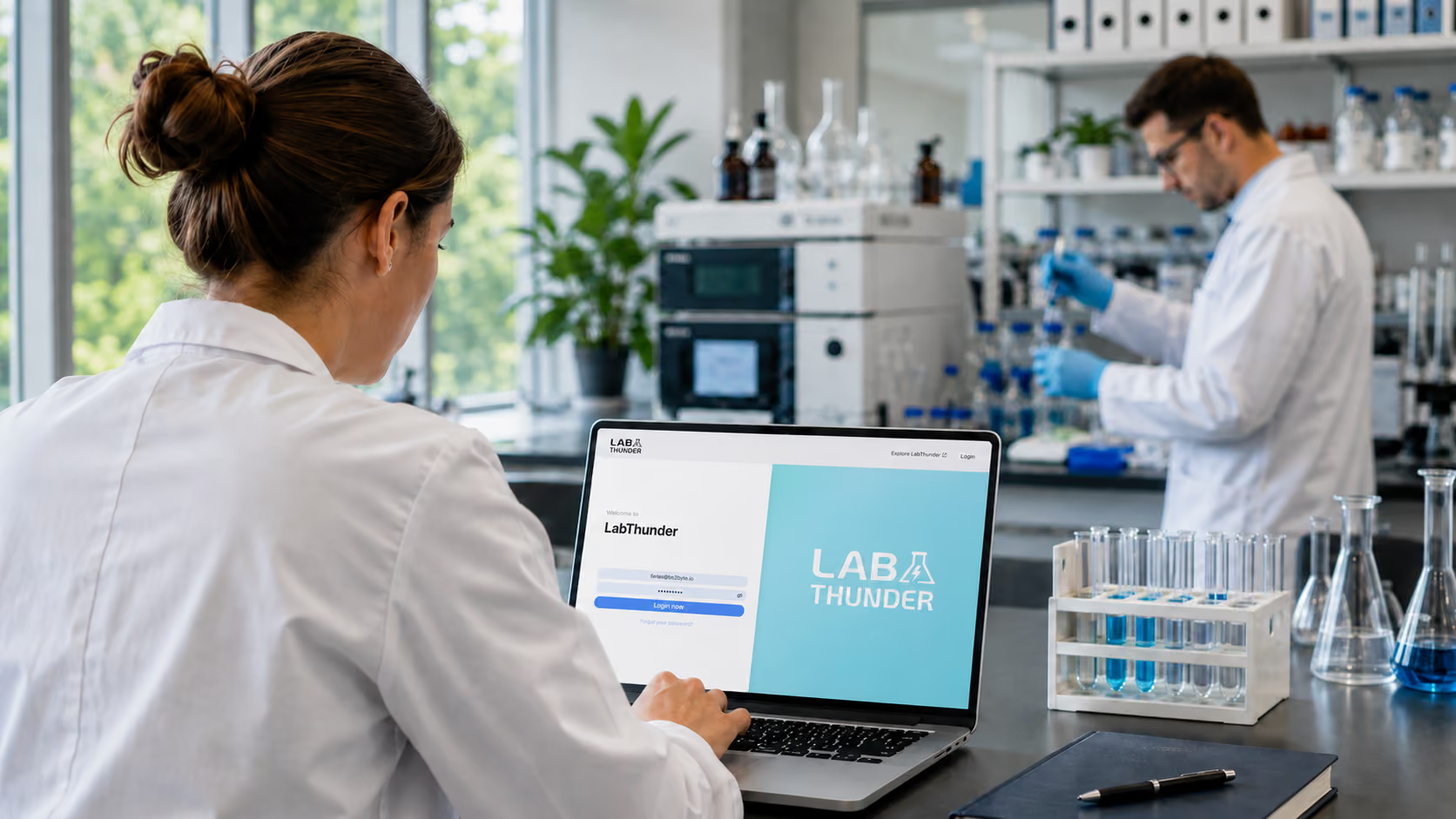
Profitipp: Many laboratories underestimate the importance of structured equipment management. Yet, analytical systems form the foundation of the business and are essential for reliable results. Implement an equipment management system early on to plan maintenance, minimize downtime, and extend the lifespan of your equipment. Some systems are even available free of charge. I recommend LabThunder as a solution.for professional equipment management.
Practical example: "Increased efficiency through the centralized management of laboratory equipment"
A medium-sized laboratory was able to increase its productivity by 30% after implementing an equipment management system. Before implementation, equipment management was time-consuming and maintenance inefficient, often leading to unnecessary equipment downtime. The new system centralized critical equipment knowledge and made it accessible to all employees, thus optimizing the handling and use of the equipment.
Furthermore, service costs were almost halved, as maintenance work was better planned and ad-hoc repairs were reduced. The centralized collection and analysis of operational data enabled preventive maintenance strategies, which saved further costs and improved laboratory workflows. This example underscores how modern technologies can contribute to significant efficiency gains in laboratories.
Step 10: Meet legal and regulatory requirements
Anyone wishing to establish a laboratory must comply with a multitude of legal requirements and regulations. These concern not only the laboratory operation itself, but also the handling of chemicals, data protection, and environmental regulations.
- Business registration and legal form: Choose the appropriate legal form for your business (e.g. GmbH, UG or sole proprietorship) and officially register your laboratory with the trade office.
- Permits and regulations: Depending on the type of laboratory, you will need different regulatory permits. Medical or pharmaceutical laboratories are subject to particularly strict regulations.
- Occupational health and safety guidelines: Compliance with occupational health and safety laws (e.g., Hazardous Substances Ordinance, Biological Agents Ordinance) is essential. Regular training for staff is mandatory.
- Environmental and waste disposal regulations: Handling chemicals requires proper disposal in accordance with applicable environmental regulations. Violations can result in heavy fines.
- Data protection and IT security: If your laboratory processes personal or business-critical data, you must comply with the GDPR and implement appropriate security measures for your IT systems.
Profitipp: A safe choice for setting up a laboratory is certainly the legal form of a GmbH (limited liability company) or a holding company structure. This offers limited liability to the share capital (minimum €25,000) and is recognized by business partners and authorities as a reputable company form. This protects your personal assets in the event of company insolvency.
Conclusion: Successfully establishing a laboratory and surviving in the market long-term
In my career, I've had the opportunity to get to know hundreds of laboratories and startups. Establishing a laboratory is a demanding but rewarding undertaking – provided the planning is thorough and all essential aspects are considered early on. Anyone wanting to open their own laboratory must not only deal with the appropriate legal structure, the selection of suitable premises, and financing, but also with the right equipment, laboratory organization, and quality assurance.
Competition in the laboratory sector is fierce, especially from large laboratory chains. However, specialized laboratories offering excellent service, personalized consultation, and high-quality analysis still have their place. Through smart strategic partnerships, well-structured equipment management, and the use of modern technologies and software solutions like LabThunder, a laboratory can remain competitive and profitable in the long term.
If you're a chemist looking to become self-employed and open your own laboratory, remember: Take your time for detailed planning, carefully analyze the market, and invest in a strong team and future-proof laboratory infrastructure. This will help you avoid costly mistakes and lay the foundation for a successful business.
I hope this article was helpful and shed light on some specific aspects of setting up a laboratory. I wish you every success with your venture!
.avif)
Why holistic knowledge management is the key to successful laboratory automation

.avif)
.avif)